June 29th, 2025
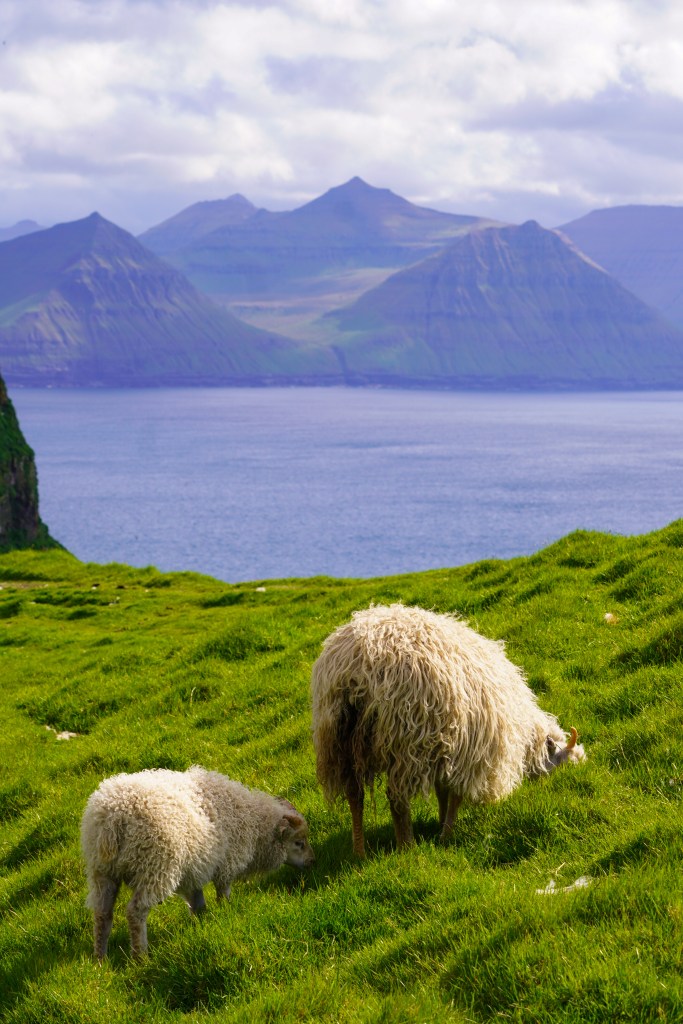
The Faroe Islands have quickly become my favorite place I’ve ever traveled to — a stunning, rugged archipelago with a rich history and breathtaking landscapes at every turn. These 18 islands, a territory of Denmark, have a fascinating past that stretches back over 1,800 years: first settled around 200 AD when early settlers introduced sheep to the islands, followed by monks arriving around 600 AD, and then Vikings in 900 AD who left their mark on the culture and traditions still alive today. Out of these 18 wild and wonderful islands, I had the incredible opportunity to explore 11, each offering its own unique charm and adventure. Whether you’re drawn by history, nature, or simply a love for remote and beautiful places, the Faroes won’t disappoint.
In this guide, I’ll cover all your logistics questions, detail each island I visited, and share the best things to see and do on each one to help you plan an unforgettable trip.
Table of Contents:
- ✈️ Let’s Talk Logistics (aka How to Get to the Middle of the North Atlantic Without Losing Your Mind)
- 🏞 Vágar: Waterfalls, Sea Arches & a Splash of Strategy
- 🐦 Mykines: Puffin Paradise at the Edge of the World
- 🏡 Streymoy: The Heartbeat of the Faroes
- 🌄 Northern Streymoy
- 🏞 Southern Streymoy
- 🌿 Eysturoy: Cliffs, Gorges & the World’s Wildest Roundabout
- 🧘♀️ Sandoy: Peace, Cliffs, and Ice Cream at Sunset
- ⛰️ Suðuroy: Helicopters, Sea Stacks & a Taste of Adventure
- Bordoy, Kunoy, and Viðoy, oh boy! 🏔️
- Kalsoy 🚢🌄
- What to Pack for the Faroe Islands 🌧️
✈️ Let’s Talk Logistics (aka How to Get to the Middle of the North Atlantic Without Losing Your Mind)
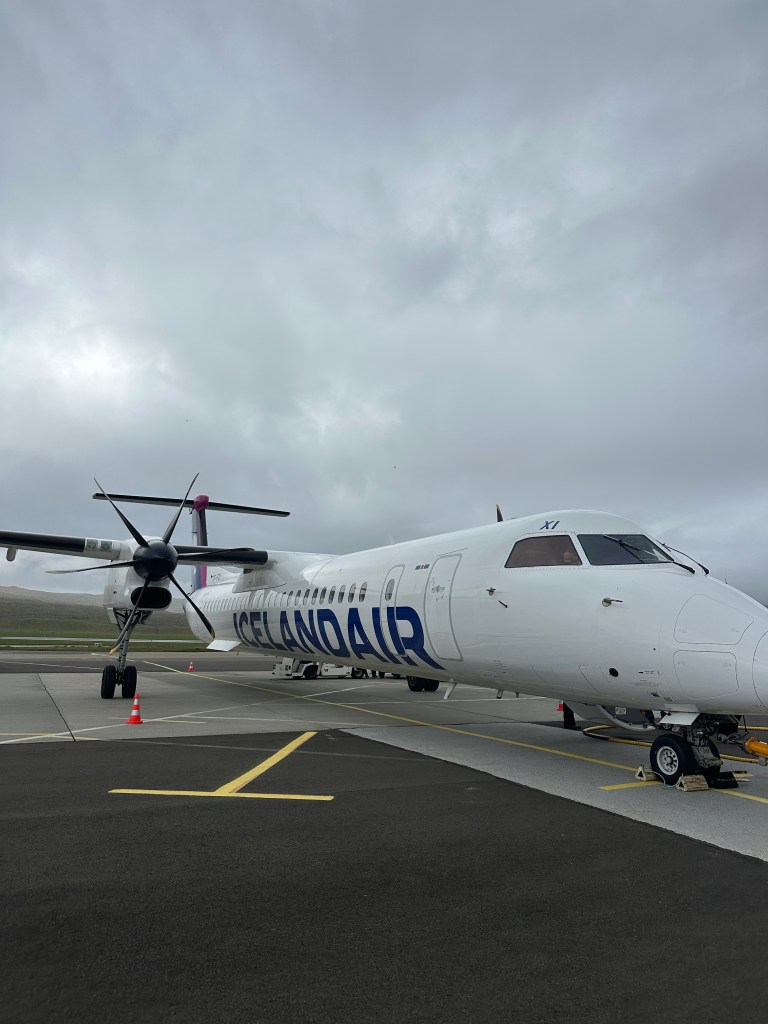
Getting to the Faroe Islands is half the adventure—and I promise, it’s worth every mile. There’s only one public airport in the Faroes, located on the island of Vágar. I flew round-trip from Keflavík, Iceland (KEF) with Icelandair and cleverly tacked this leg onto an Iceland Ring Road trip, efficiency friends.
Other flight options? You’ve got direct connections from Denmark and Dublin, Ireland. Or, if you’re feeling extra nautical, there’s the legendary overnight ferry from Iceland or Denmark—yes, you can even bring your car along for the ride. (Click [here] to book that floating hotel.)
Airline PSA: If you’re flying with Icelandair, heads up—carry-on luggage sizes are not your average American-sized roller bag. They’re smaller (like, really smaller). The staff were super accommodating and let me carry on or check my bag for free both ways, but normally it’s a cool $100 USD if your bag is larger than 55 x 40 x 20 cm (21.6 x 15.7 x 7.8 inches) and over 10 kg (22 lbs).
Pro tip: Grab a window seat. The flight path takes you over Iceland and the approach into Vágar is downright cinematic—jagged cliffs, green mountains, and some of the most jaw-dropping scenery I’ve ever witnessed. Fun fact: Vágar Airport has one of the shortest commercial runways in the world. So, yeah—brace yourself (and maybe skip the in-flight coffee).
🚗 Getting Around: Wheels, Wings, and Waves
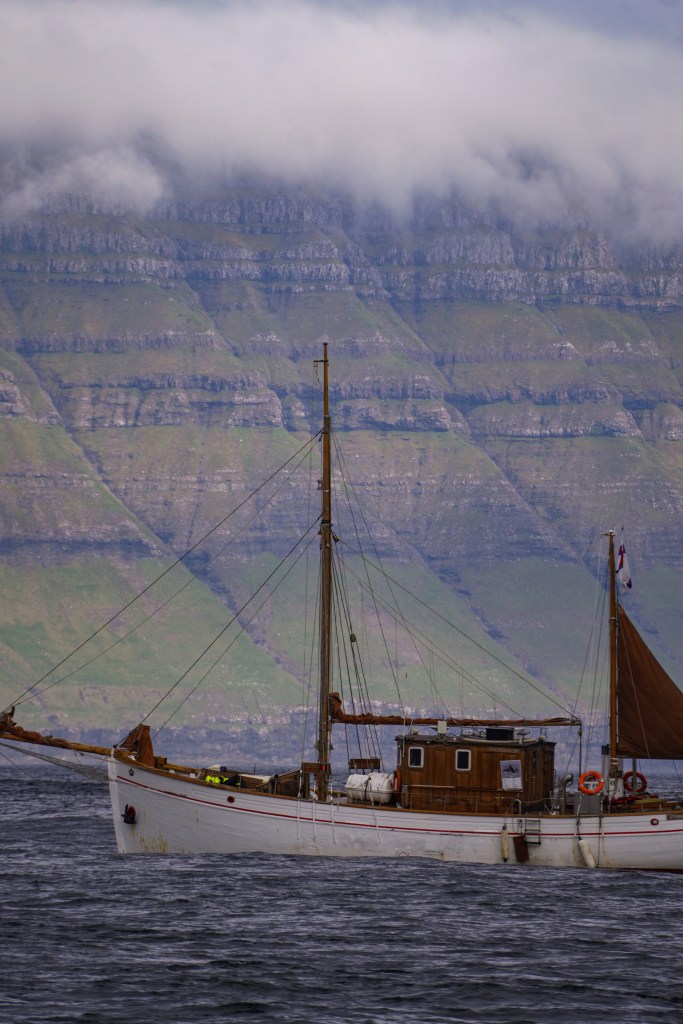
The Faroe Islands may be remote, but their public transportation game is impressively on point. Buses, ferries, and even helicopters connect the islands in a well-oiled network that runs with Nordic precision.
If you’re watching your wallet and have time to spare, the inter-island bus and ferry system will get you to most major towns. But with only 6 days to explore, I splurged on a rental car—and I don’t regret it. The freedom to roam is worth the price tag.
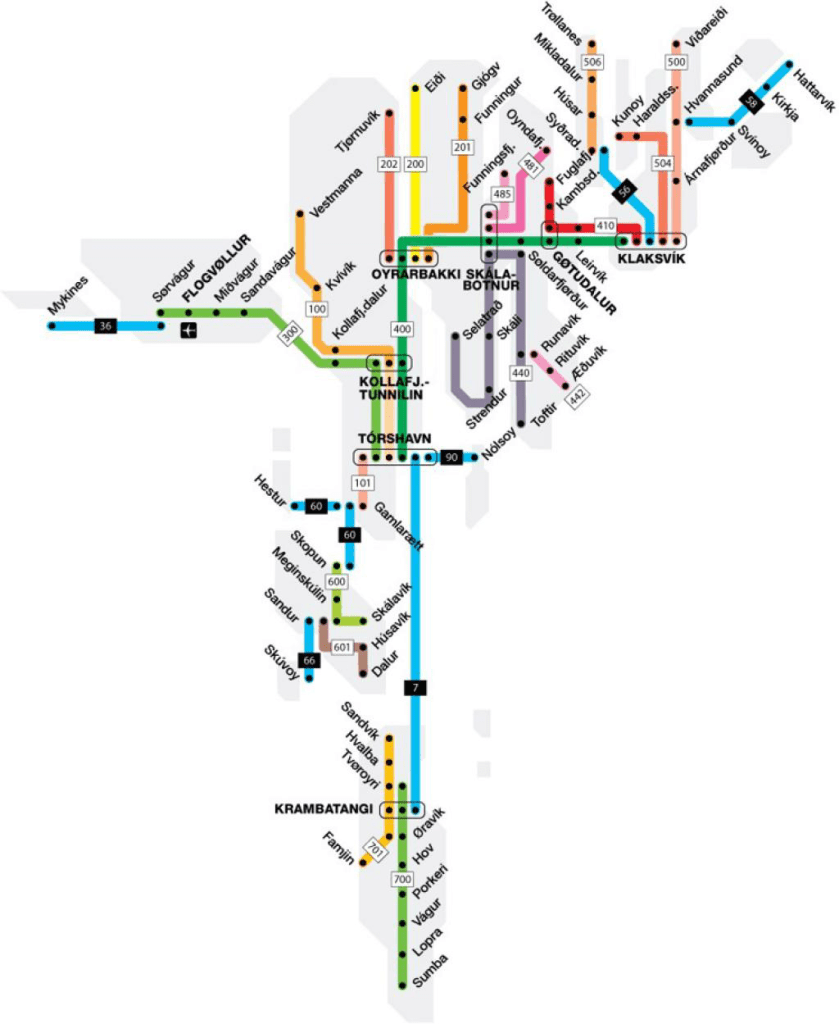
🗺️ Find the public transportation map below or [here] and the bus schedule [here].

🚗 Renting a Car in the Faroes: Small Islands, Big Freedom
There are about six rental car agencies at Vágar Airport, all conveniently located in a small building just to the left as you exit the adorably tiny terminal. I originally booked with Avis, but after some digging, I made the switch to a local gem: CarRent.FO
Why? Three magic words: Collision coverage included. No sneaky add-ons. They also had the best rates and stellar reviews. Local wins again.
I went with the tiniest car on the lot—and I’m glad I did. The roads in the Faroe Islands are all smoothly paved, but they can get very narrow (think one-lane cliffside roads with sheep as your occasional traffic jam). My compact ride was not only budget-friendly, it was stress-friendly.
Another bonus with CarRent.fo: any tolls you rack up are automatically deducted from your deposit (around $300 USD), so there’s no awkward toll-booth fumble or post-trip surprise bills. The rental car was my biggest trip expense, but also the best investment—I got to see every windswept corner of these islands on my own terms.

🚧 Tunnels & Tolls: Know Before You Go (Underground)
The Faroe Islands have four major sub-sea tunnels, and yes, they come with tolls. The fees vary depending on the tunnel, so a little pre-trip planning can save you some serious change.
Pro tip: Map out your route in advance to minimize repeat trips through the pricier tunnels (some of them can sneak up on your budget). The four sub-sea toll tunnels include:
- Vágatunnilin (Vágar to Streymoy): 100 DKK for a round trip.
- Norðoyatunnilin (Borðoy to Eysturoy): 100 DKK for a round trip.
- Eysturoyartunnilin (Streymoy to Eysturoy): 175 DKK for a one-way trip.
- Sandoyartunnilin (Streymoy to Sandoy): 350 DKK for a round trip.
Good news? The tunnels through the mountains (as opposed to under the sea) are free. You’ll see cameras at the entrances, but don’t worry—they’re not there to charge you. Just smile and drive.
⛴️ Ferry Boats: Your Shortcut to Remote Island Magic
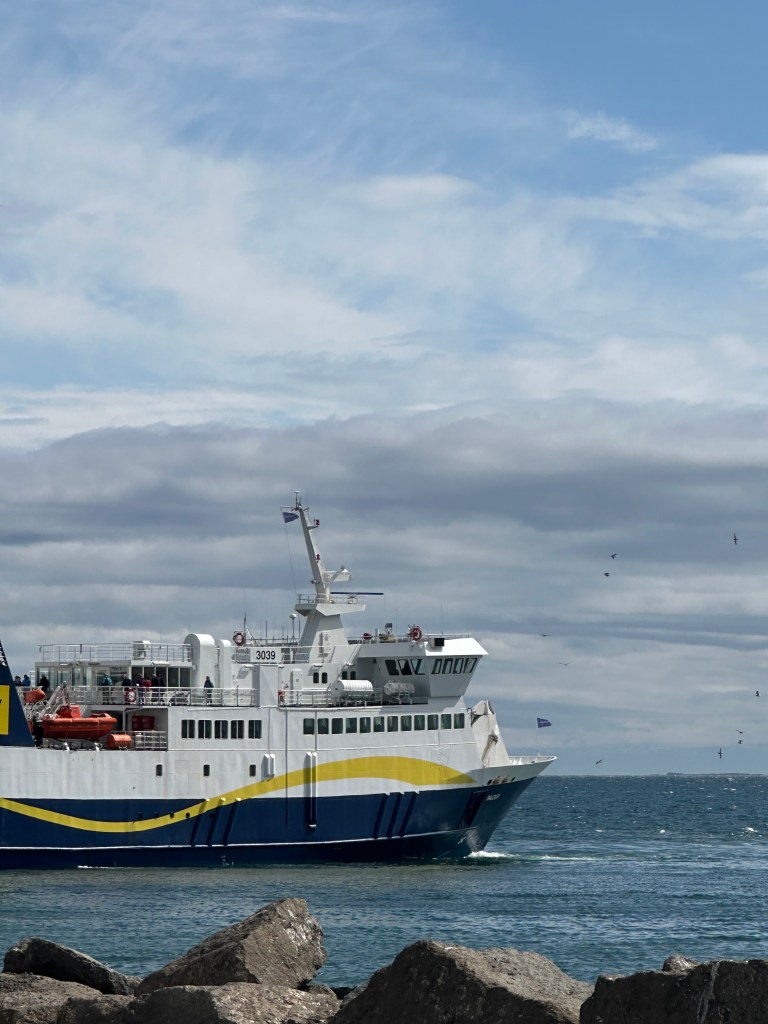
Island hopping in the Faroes isn’t just scenic—it’s surprisingly affordable. Several ferry routes connect the main islands with their more remote neighbors, and yes—you can bring your rental car along for the ride (just make sure to reserve in advance, especially during high season).
Taking the ferry lets you unlock parts of the archipelago you’d otherwise miss—like the puffin-packed cliffs of Mykines, the dramatic tunnels of Kalsoy, and the rugged charm of Suðuroy.
You can book your ferry rides [here]. The routes I used (and highly recommend) are:
- 🚢 Sørvágur (Vágar) → Mykines – Route 36: Your gateway to puffin paradise.
- 🚢 Klaksvík → Kalsoy – Route 56: The road to the Kallur Lighthouse and the 007 James Bond graveyard
- 🚢 Tórshavn → Suðuroy – Route 7: A longer crossing, but absolutely worth it for wild coastlines and peaceful villages.
They’re all reliable, scenic, and a great way to turn transit into part of the adventure.
🚁 Helicopters: Yes, You Read That Right

Here’s a wild little secret: The Faroe Islands are the cheapest place in the world to fly in a helicopter. No, seriously.
Thanks to a government-subsidized service operated by Atlantic Airways, helicopters are a normal (and incredibly scenic) form of public transportation for locals commuting to and from remote islands. That means you can also hop on board—without blowing your budget.
These flights are mainly one-way and can’t be used for round-trip day tourism (unless you’re staying overnight), but if your route lines up, it’s a bucket-list-worthy ride that won’t break the bank. Just note that the schedule is designed with residents in mind, not tourists—so plan accordingly.
Since riding in a helicopter has always been on my bucket list, this was a must-do activity. That said, these flights are primarily for locals, so if you’re traveling with a group of three or more, I recommend booking a private helicopter excursion instead—let’s not be those tourists disrupting someone’s grocery run.
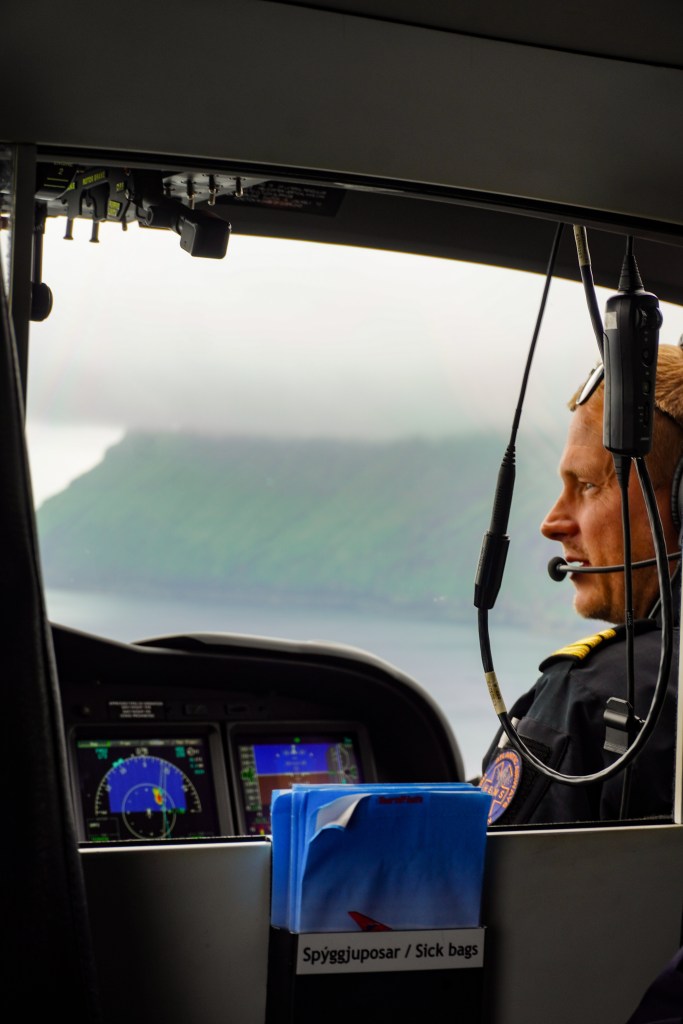
I chose the longest route available:
Tórshavn (Streymoy) → Froðba (Suðuroy)
Why? More airtime, of course. This particular route includes two scenic stopovers—in Sandoy and Skuvoy—meaning you get to take off and land three times (dreams do come true). One of the takeoffs even launches over a dramatic sea cliff—absolutely unforgettable.
A few things to note:
- 🕑 This route only opens for booking 2 days in advance, and flights are often canceled due to fog or weather (because, well, it’s the Faroes).
- ✅ If your flight is canceled, you’ll be fully refunded.
- 💼 You’re allowed up to 50 kg (110 lbs) of luggage.
- 📍You can view helipad locations, timetables, and book flights [here].
Pro tip: Try to book your helicopter ride early in your trip so you have time to reschedule if the weather doesn’t cooperate. And always have a Plan B—just in case those clouds roll in.
🏞 Vágar: Waterfalls, Sea Arches & a Splash of Strategy
Vágar is more than just the island with the airport—it’s a destination in its own right, packed with some of the Faroe Islands’ most iconic views. I recommend staying here for at least one night when you arrive or depart—or exploring Vágar first before heading to other islands. Why? Toll roads. This little planning hack can save you from paying to pass through the same tunnel more than once.Here are the highlights you won’t want to miss:
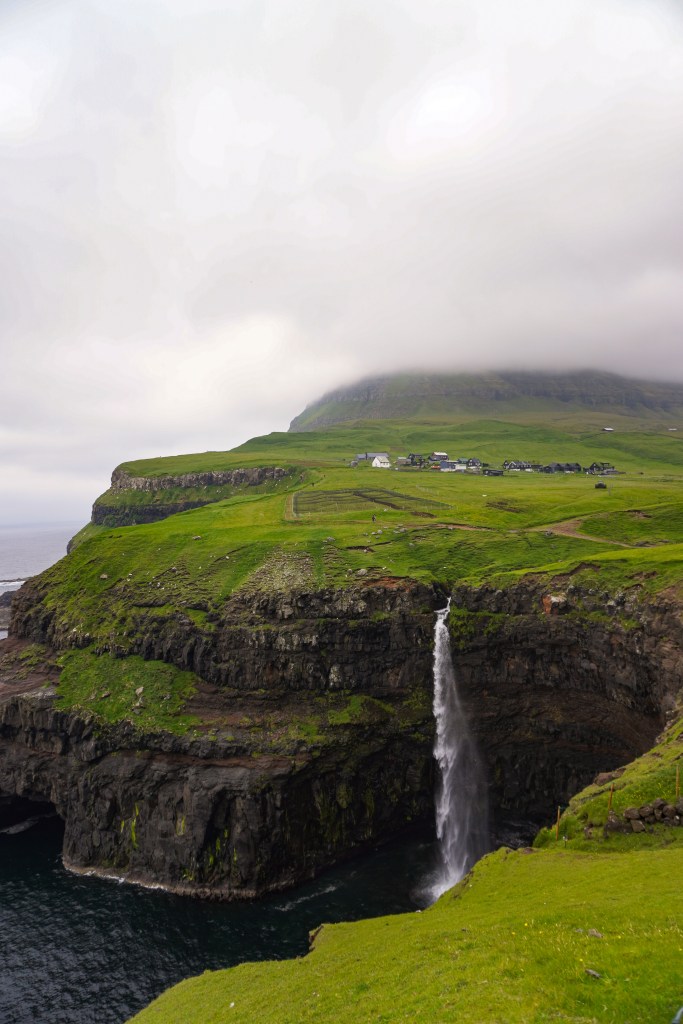
💦 Múlafossur Waterfall
This is the waterfall—the one that tumbles off a cliff into the sea and stars in just about every Faroe Islands photo ever. It’s located in the village of Gásadalur, where you can park for free and follow the short path straight to the view. No entrance fee, no hike, no fuss—just pure, dramatic Atlantic beauty.
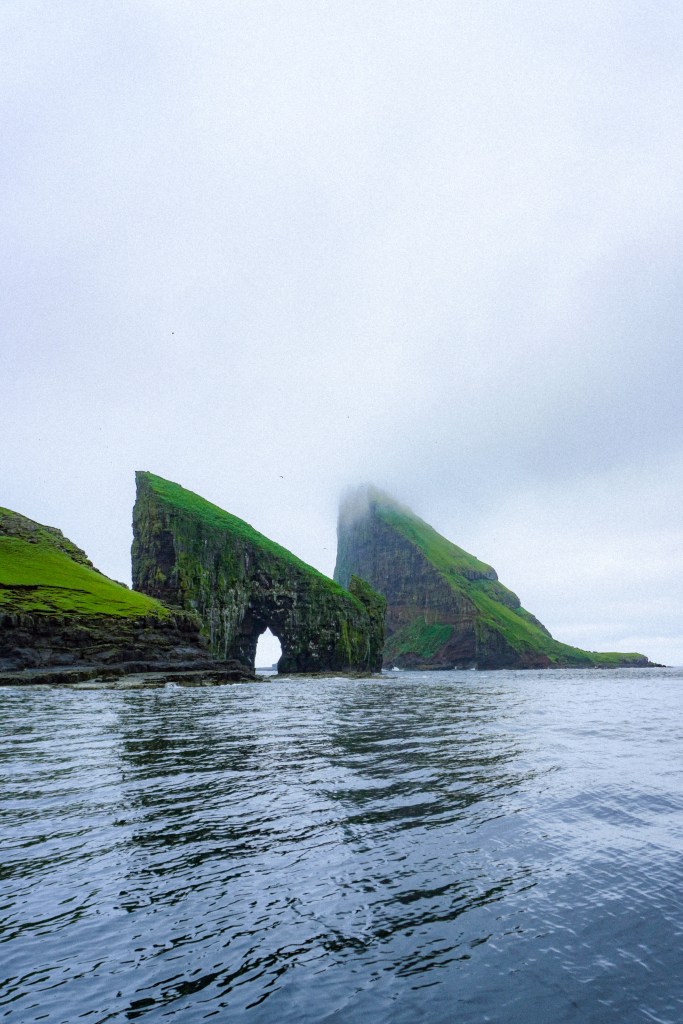
🌊 Drangarnir Sea Arch
This one’s a bit trickier—and pricier. Hiking to the arch costs 800 DKK (~$125 USD) per person and requires a guide. It’s about 7 miles round-trip and takes up most of the day. Instead, I opted for the boat tour with Guide To The Faroe Islands (about 990 DKK / $155 USD), and honestly? Best decision. A 20-minute ride gets you up close and personal with the arch, including sailing through it. After docking, you get around an hour to explore the surrounding cliffs. Pro traveler moment: When fog threatened to ruin my view, I asked one of the guides if we could sail through again once it cleared. He let me hop in solo and took me back through the arch while the group hiked down—absolute magic.
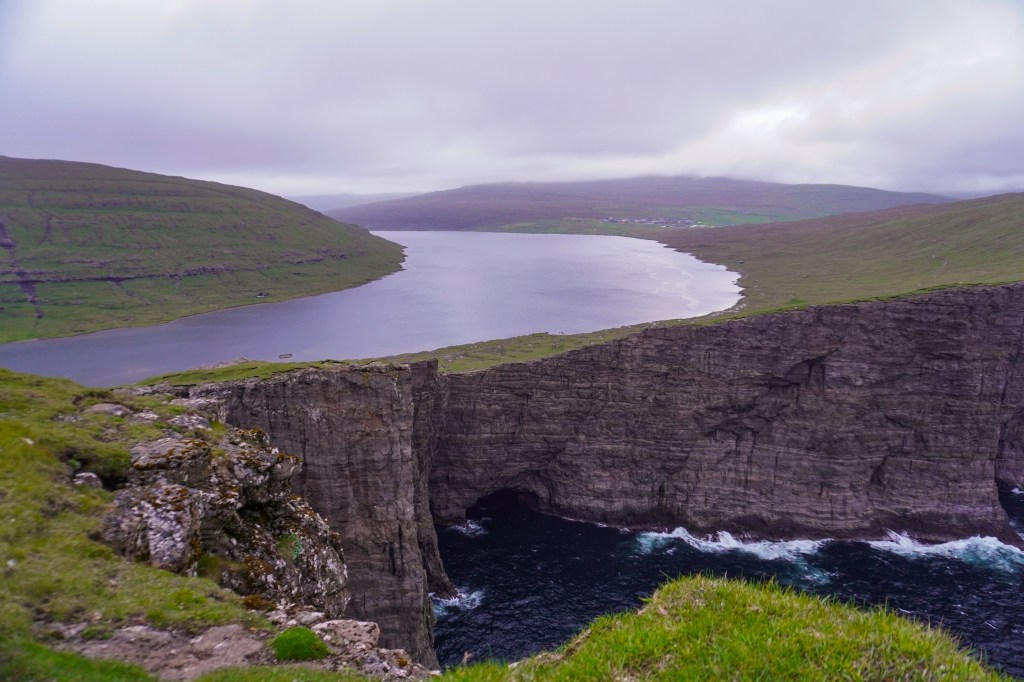
🌄 Lake Sørvágsvatn (aka “The Lake Above the Ocean”)
This jaw-dropping optical illusion is what originally drew me to the Faroes. The lake sits right on the edge of a sea cliff, and from the right angle, it looks like it’s hovering above the Atlantic.The hike to the iconic Trælanípan viewpoint (a.k.a. “Slave Cliff”) is about 4 miles round trip. Go on a clear day—fog can erase the entire illusion, and you’ll just be staring into a white void wondering where the lake went. The cost is 200 DKK per adult.
🪨 Dunnesdrangar
This trail leads you to a view above some dramatic sea stacks. It costs 465 DKK, but to be honest, I would skip it and see other sea stack views across the islands—especially considering the price. If you plan to explore other islands (and you should), you’ll find more dramatic cliffs, better angles, and way more affordable hikes—or even free ones.
🧙♀️ Trøllkonufingur (Witch’s Finger)
This quirky rock spire has its own folklore charm and a short hike (about 2 miles roundtrip) to reach the view. It costs 200 DKK per adult. I skipped this one in favor of the free Liraberg Cliff hike on Sandoy, which offers similar vibes. A pattern quickly emerges here: Vágar charges for most hikes, while other islands don’t. My theory? Not everyone makes it beyond Vágar, so the locals are maximizing their tourism opportunities. Can’t blame them—but if you’re venturing farther, your hiking dollars go further too.
🐦 Mykines: Puffin Paradise at the Edge of the World
Population: 12 in summer, 6 year-round. Puffins? Thousands.

Mykines (pronounced Mitch-uh-ness) is the most remote and quaint island in the Faroe Islands—and hands down one of the best experiences you can have while visiting. Tucked all the way to the western edge of the archipelago, Mykines takes the full force of the Atlantic Ocean, which makes it wild, beautiful, and often inaccessible.
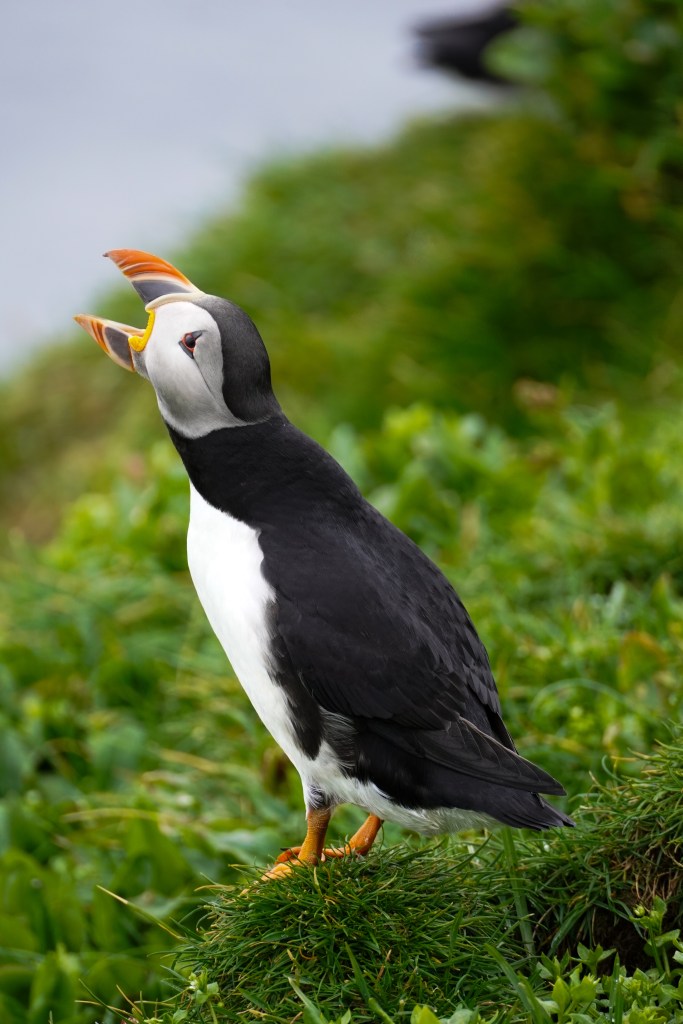
It’s also considered one of the best places on the planet to see puffins in the wild. So if puffins are on your wishlist—and let’s be honest, they should be—this island is a must.
🚢 Getting There
You can only reach Mykines by ferry or helicopter, and both are frequently canceled due to weather. The island has no formal dock—just a natural harbor—so if the waves are too rough, the boats won’t land.
I lucked out with perfect conditions: calm seas, overcast skies (ideal for photos), and no wind. I booked my ferry several weeks in advance—and recommend you do the same. It’s a small passenger-only boat (no cars) and fills up quickly. If your trip gets canceled due to weather or maintenance, you’ll get a full refund.
👣 Guided Puffin Tour
To protect the puffins and their fragile nesting grounds (they burrow underground, and you can’t see the nests), a guided tour is required. The cost is 450 DKK if booked in advance or 500 DKK on-site—and it’s well worth it.
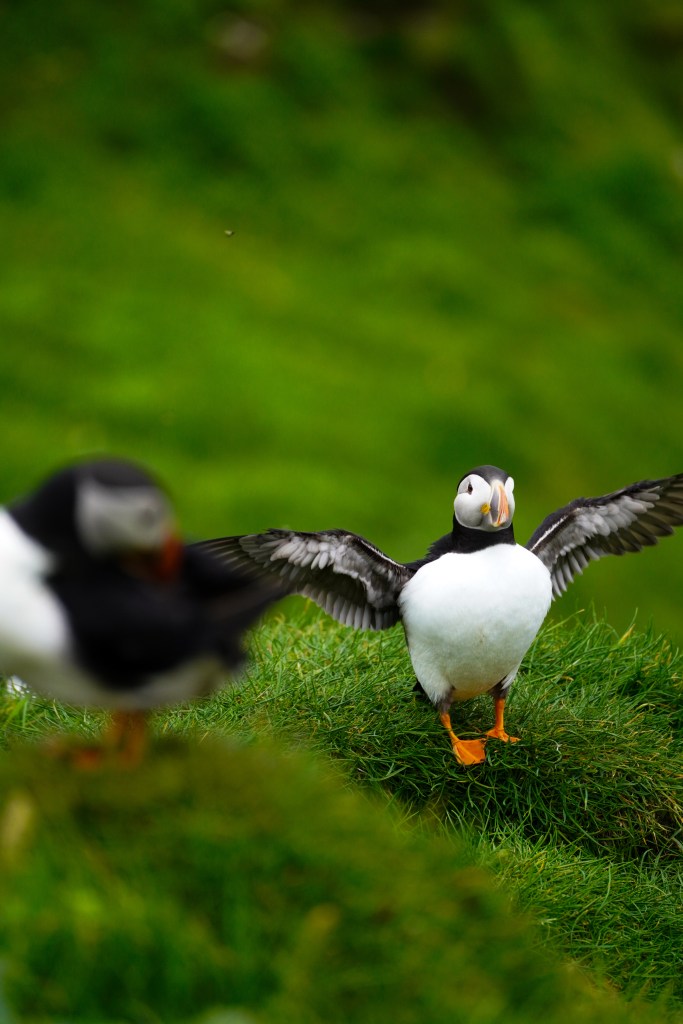
The tour includes a local guide who shares fascinating facts about the island, puffin behavior, and Mykines’ isolated way of life. After the main portion of the walk, you’re free to continue along the cliffs for a solo stroll with stunning ocean views.
📸 Pro tip: Bring your best camera gear if you have it. Mykines is a photographer’s dream—and these birds aren’t shy.
⚠️ Important: Don’t miss the last ferry of the day. There are no last minute accommodations on the island, and if you miss the boat… well, you’re spending the night with six locals and a lot of seabirds.
This was an absolute highlight of my trip. The dramatic cliffs, the puffin encounters, and the untouched feel of the island made it feel like stepping into another world. If the weather plays nice, do not skip Mykines.
🏡 Streymoy: The Heartbeat of the Faroes
Streymoy is the largest island in the Faroe Islands and home to its charming capital, Tórshavn. If you’re looking for food, accommodations, or a central base for your adventures, Streymoy is your go-to. I stayed in the quiet village of Kollafjørður in an Airbnb I highly recommend. It was the perfect hub for my trip—centrally located and just a quick hop from the free bridge to Eysturoy (yes, free bridges do exist in a land full of toll tunnels).
I split my exploring into two chunks: Northern Streymoy + Eysturoy in one day, and Southern Streymoy on another.
🌄 Northern Streymoy
🏞 Saksun
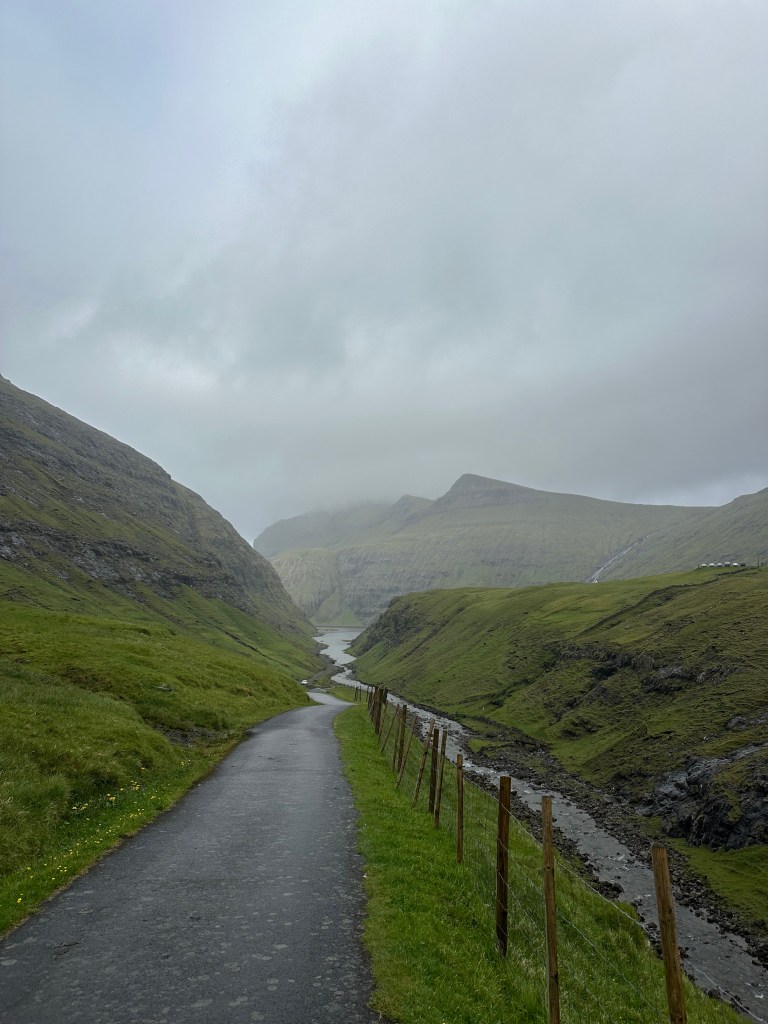
Getting to Saksun is half the experience: a long, narrow road winding through jaw-dropping valleys (and if you’re lucky, under a rainbow or two). This remote village is nestled between cliffs and features a stunning black sand beach that opens to the sea. You can hike the beach during low tide only, so plan ahead.
Bonus: The hike used to have a fee, but the landowner has since stopped charging. I went around 8 a.m. and had the whole beach to myself. Pure serenity.
Skip the overhyped Saksun Farm, which charges a steep entrance fee—there are plenty of scenic turf-roofed houses elsewhere for free. But do stop by the church across the road for great views. It’s closed to visitors due to past disrespect, so be mindful and soak it in from the outside.
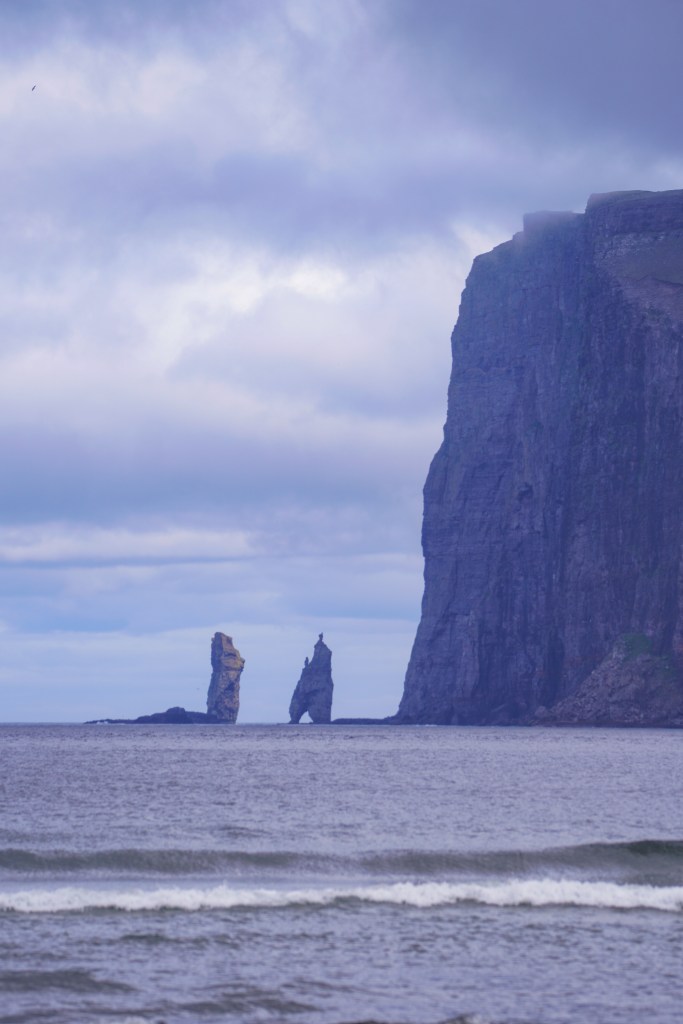
🏄♂️ Tjørnuvík
Yes, the Faroes have a surf town—and it’s stunning. Tjørnuvík boasts an epic beach with views of the famous Risin og Kellingin sea stacks (translation: “The Giant and the Witch”). Even if you’re not braving the freezing surf, this spot is perfect for soaking in scenery with a slice of chocolate cake from the adorable local café.
This town is also the trailhead for the Mylingur Hike (a.k.a. Lonely Mountain). It’s 7 miles round-trip, remote, unmarked, and not for the faint of heart. I planned to do it, but weather and fog convinced me otherwise—and no regrets. Skipping it gave me time to explore more of the islands.
💧 Fossá Waterfall
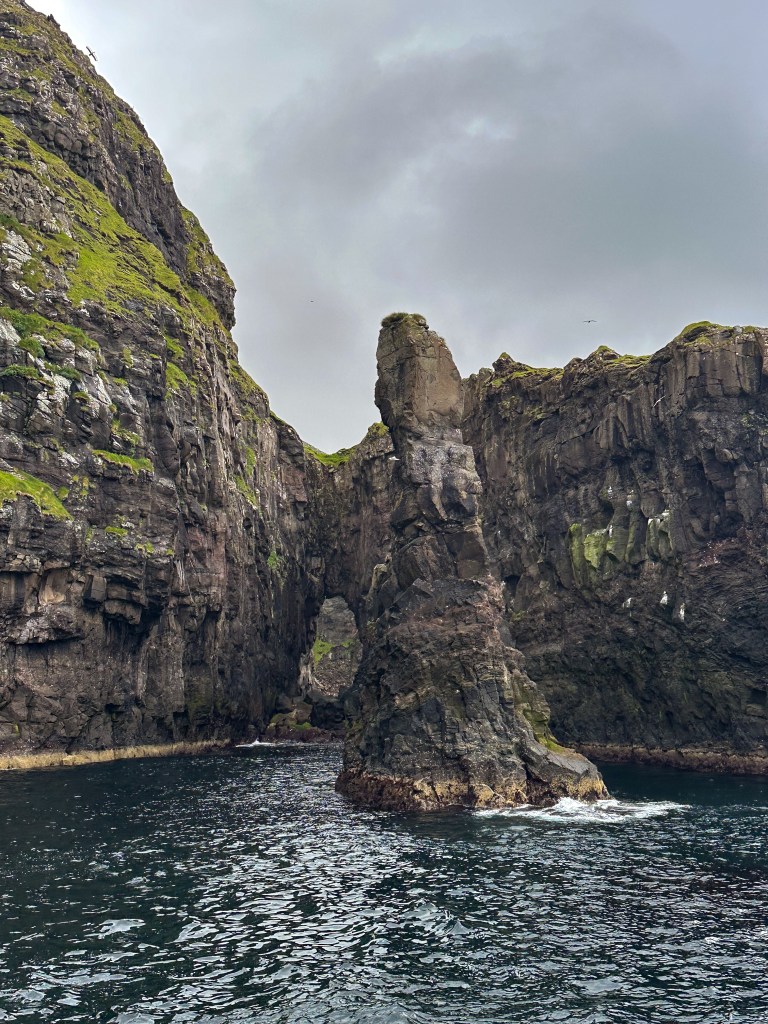
Located not far from Tjørnuvík, Fossá is the tallest waterfall in the Faroe Islands. That said, you’ll see waterfalls literally everywhere in the Faroes. If you’re short on time, this one can be skipped without much FOMO.
🚤 Vestmanna
Want to see sea stacks up close without a long, pricey hike? Take the Vestmanna Sea Cliffs Tours—about 398 DKK for 2 hours of cruising beneath towering cliffs and sea caves. It’s a solid alternative to the expensive Dunnesdrangar hike and can be squeezed in before your afternoon flight if you’re leaving via Vágar airport.
Vestmanna also has a tourist info center and restaurant—a rare combo outside Tórshavn—making it a handy pit stop for info, food, or souvenirs.
🏞 Southern Streymoy
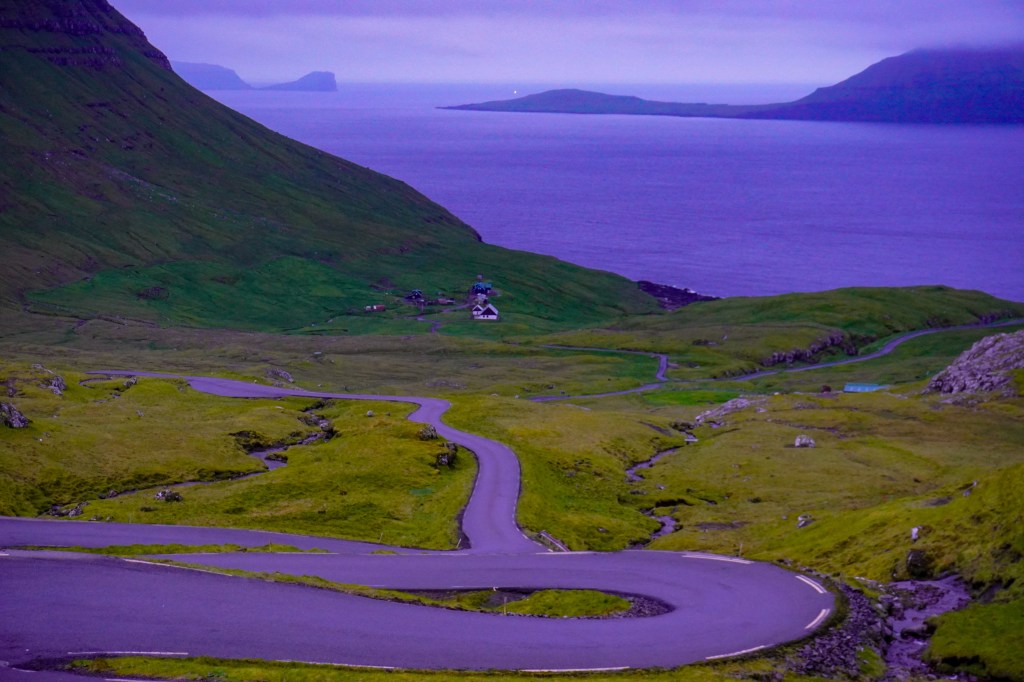
🌀 Neytaskarð (Winding Road Viewpoint)
This twisty road leads to a tiny village and one of the best viewpoints on the island. It’s perfect for sunset drives or late-night solitude—I went at 10 p.m. and had it all to myself. Thanks to 24-hour summer daylight, you can plan around the crowds and feel like you’ve got the island to yourself.
🏙 Tórshavn (Capital City)
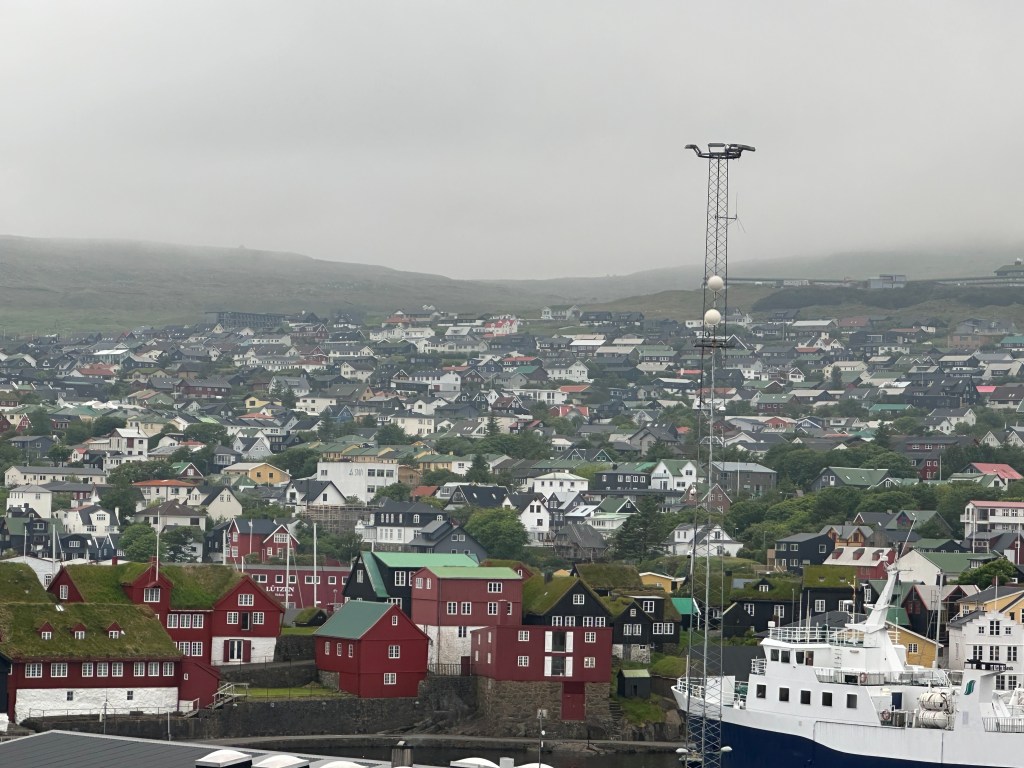
Don’t want to cook? Tórshavn is your new BFF. Most small village restaurants in the Faroes have odd hours or are closed completely, so if you need food, this is your most reliable spot.
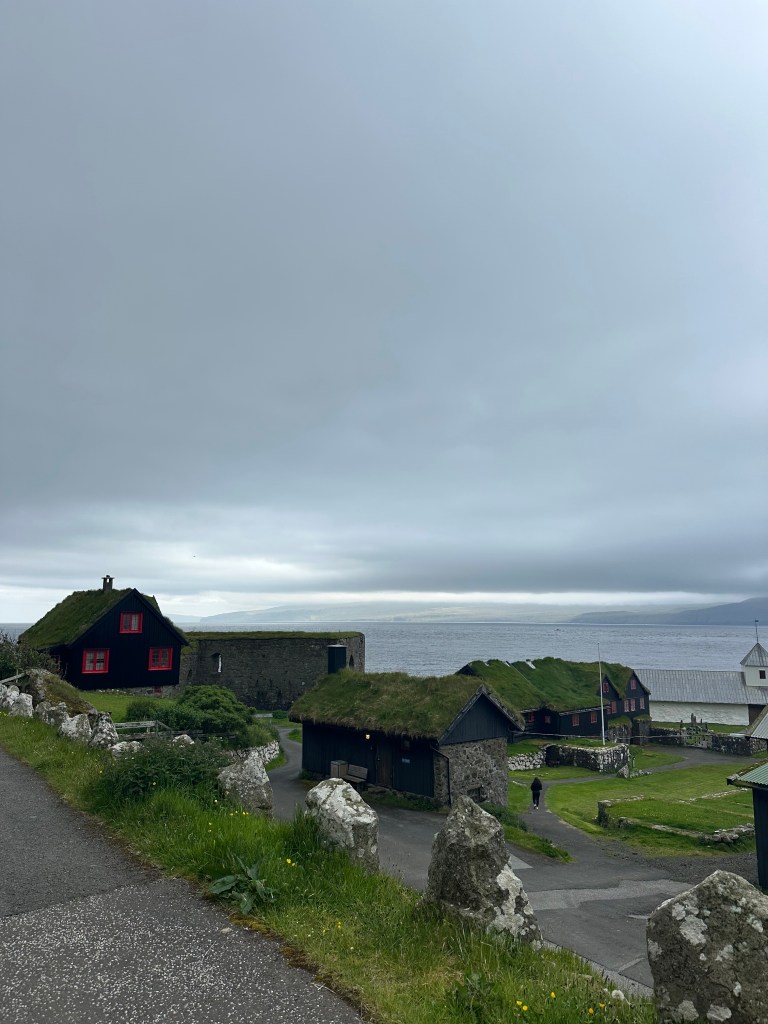
The city itself is charming—think old Danish architecture, narrow alleys, turf-roofed houses, and echoes of British World War-era bases. You’ll also find the widest range of accommodations here, though I chose to stay further north to avoid the web of toll tunnels surrounding the capital.
⛪️ Kirkjubøur
If you’re a fan of turf-roofed black houses, history, and epic views, Kirkjubøur is a must. It’s home to Magnus Cathedral (Kirkjubømúrurin)—the oldest structure in the Faroes, dating back to the Middle Ages (and never finished). You can also step inside a traditional Faroese home and learn about local life.
Pro Tip: Kirkjubøur is located near the entrance of the Sandoyartunnilin (the new tunnel to Sandoy). It makes a perfect stop on your way south to that island.
🌿 Eysturoy: Cliffs, Gorges & the World’s Wildest Roundabout
Eysturoy is the second-largest island in the Faroes and offers a beautiful mix of sweeping landscapes, cliffside towns, and dramatic sea views—plus, it’s home to the world’s only underwater roundabout (yes, really). I explored most of Eysturoy by car, but there are a few must-see spots you’ll want to hop out for.
🥾 Gongutúrur / Hvithamar Trail
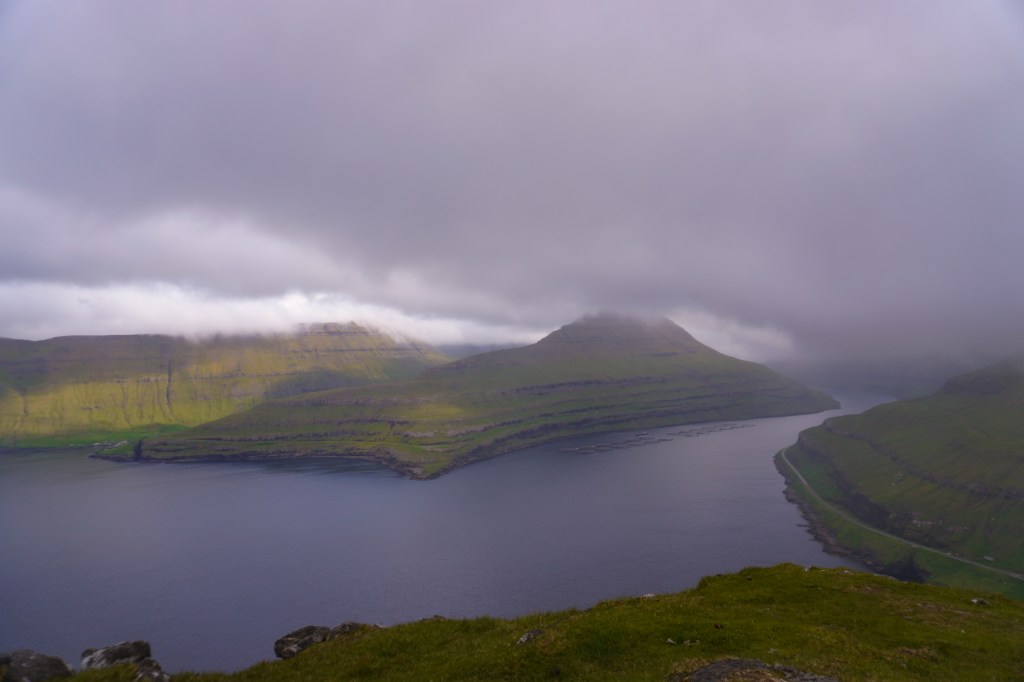
A short and scenic hike that punches way above its weight in views. If the weather’s on your side, aim for sunrise or sunset—the glow over the cliffs is unforgettable. I visited in the afternoon, after the morning fog had burned off, and it was still spectacular.This trail is free, and the route is marked by small red wood pegs in the grass. Keep an eye out—they’re easy to miss if you’re not paying attention.
🏘️ Gjógv
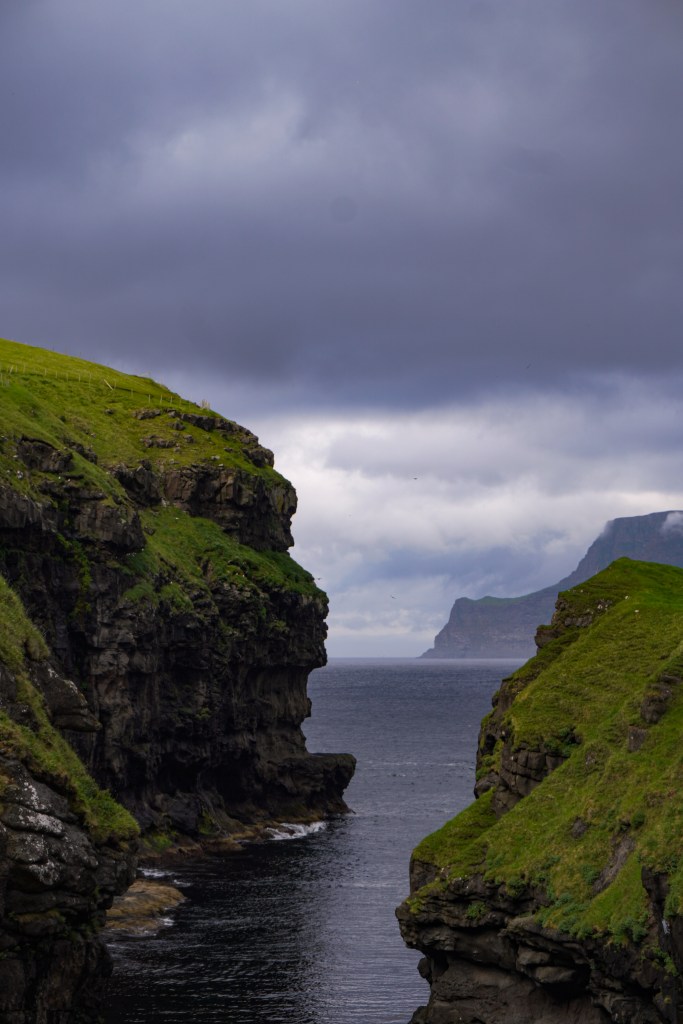
If you looked up “storybook Faroese village,” it might just show a photo of Gjógv. I arrived to find locals splashing in a natural pool along the stream, and the whole place radiated peaceful, lived-in charm.The star attraction here is the Gjógv Natural Harbour—a 200-meter-long sea-filled gorge carved into the basalt coastline. You can either walk down into the gorge (great for that thunderous wave action) or admire it from above. Feeling adventurous? Some tour companies even offer a zipline down into the gorge water—because apparently standing at the edge and soaking in the beauty wasn’t thrilling enough.There are also a few hiking trails around the village that lead to jaw-dropping views over the ocean and surrounding cliffs.
🌊 Gorge Elduvík
If Gjógv is too crowded or doesn’t fit into your route, Elduvík is another option. It has its own dramatic coastal gorge and a quaint fishing village vibe. I didn’t make it there myself, but if you have extra time, it might be worth the detour.
🚗 Scenic Drive & Subsea Detour
Much of southern Eysturoy is best explored by car, with fewer specific stops but plenty of views to soak in. On the way back, I took the Eysturoyartunnilin (that’s the one way 175 DKK subsea tunnel from Eysturoy to Streymoy) and made a special detour just to see…🎡 The World’s Only Underwater Roundabout.
Yes, it’s a real thing. Yes, it’s trippy. And yes, you’ll want to go slowly so you don’t accidentally drive in circles under the ocean. There’s even an illuminated art installation inside—because why not add a little existential wonder to your commute?
🧘♀️ Sandoy: Peace, Cliffs, and Ice Cream at Sunset
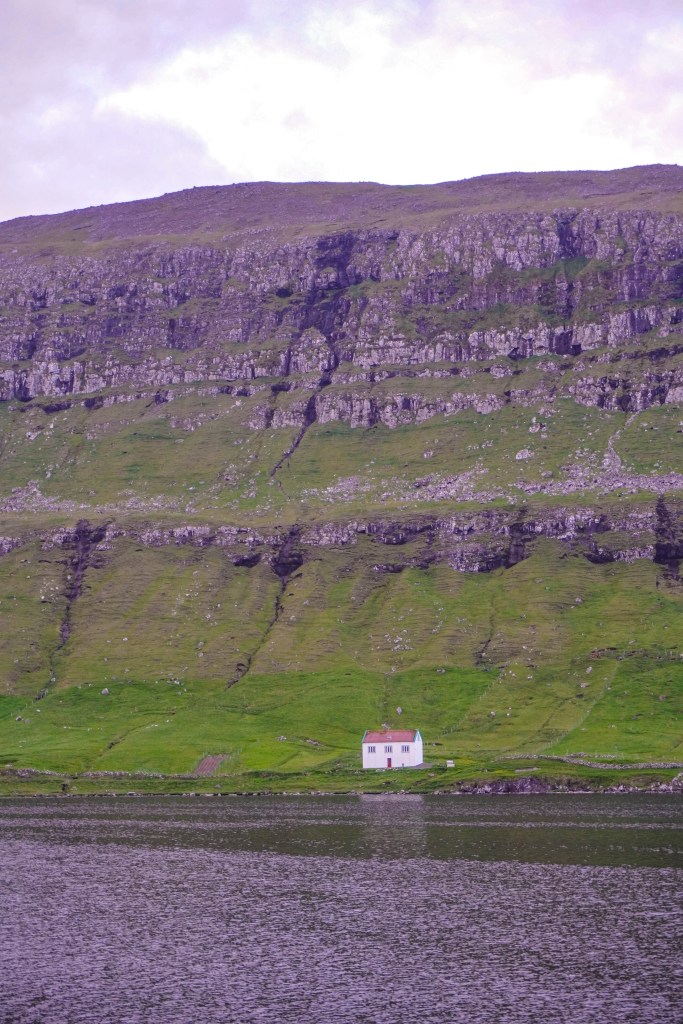
Sandoy is often overlooked—but if you’re looking for serenity, soul-stirring views, and fewer tourists, this island delivers. It’s the quietest, most peaceful place I visited in the Faroes—and it’s absolutely worth the trip.
🚇 Getting There: Sandoyartunnilin
The Sandoyartunnilin is the newest subsea tunnel in the Faroe Islands, connecting Streymoy to Sandoy. It’s 350 DKK round trip, which is a bit steep, so I suggest doing all your exploring in one day if possible to avoid paying the toll twice.
If you’re staying longer or want to really slow down, consider spending the night here. The island is wonderfully still—like nature whispered, “Shhh…” and everyone listened.
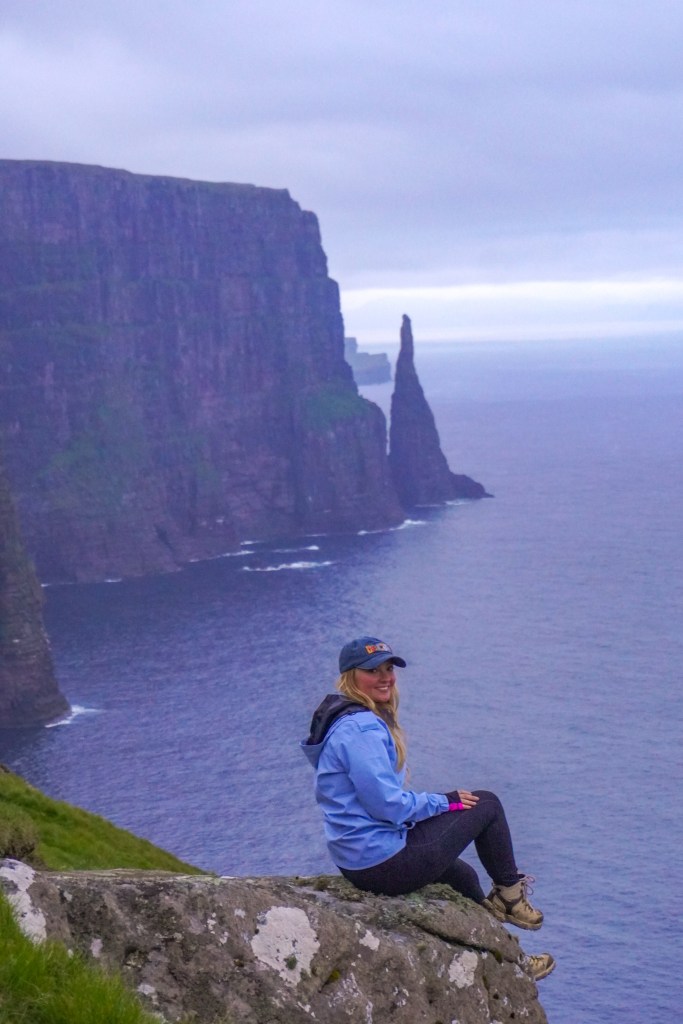
⛰ Líraberg Cliffs
Didn’t hike Witch’s Finger on Vágar? Don’t worry—Líraberg Cliffs is a free and equally epic alternative.
I did this hike around 10:30 p.m., after wandering the island in search of dinner. I eventually stumbled into Kioskin á Bakarínum in Sandur—a small convenience store that stays open late. Hot dogs, soft serve, and snacks? Yes, please.
The hike is short but steep, and the view from the top? Pure magic. The cliffs looked like they were painted onto the sky in the soft blue light of a Faroese summer “midnight.”
⛪️ Skálavík & Hamarsvegur Viewpoint
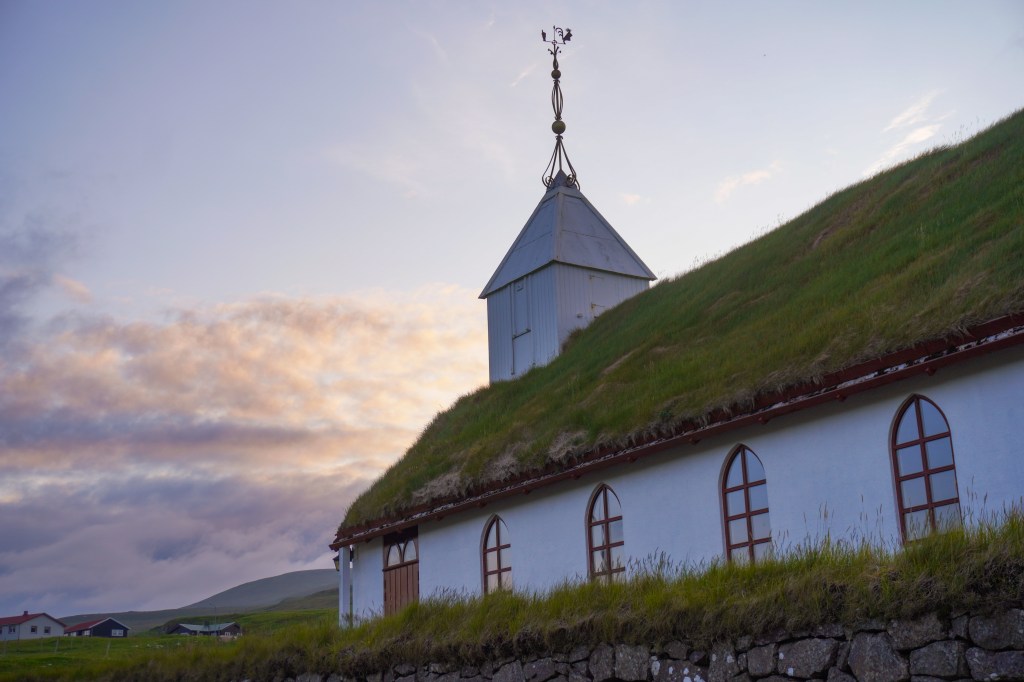
This charming village has a beautiful grass-roofed church and a peaceful vibe that feels worlds away from the usual tourist trails. I teamed up with another solo traveler and we drove up to the Hamarsvegur viewpoint. On the way: modern homes with turf roofs, wandering sheep, and sweeping views in every direction. It was quiet, calming, and so, so Faroese.
🚙 Dalur
At the southern tip of the island sits Dalur, a teeny town tucked between cliffs and sea. We didn’t stay long—just a scenic drive down and back—but the journey itself was unforgettable.
Windows down, Spotify music on, evening light pouring through the mountains… it was one of those moments where everything feels just right. No attractions, no crowds—just you, the road, and the view.
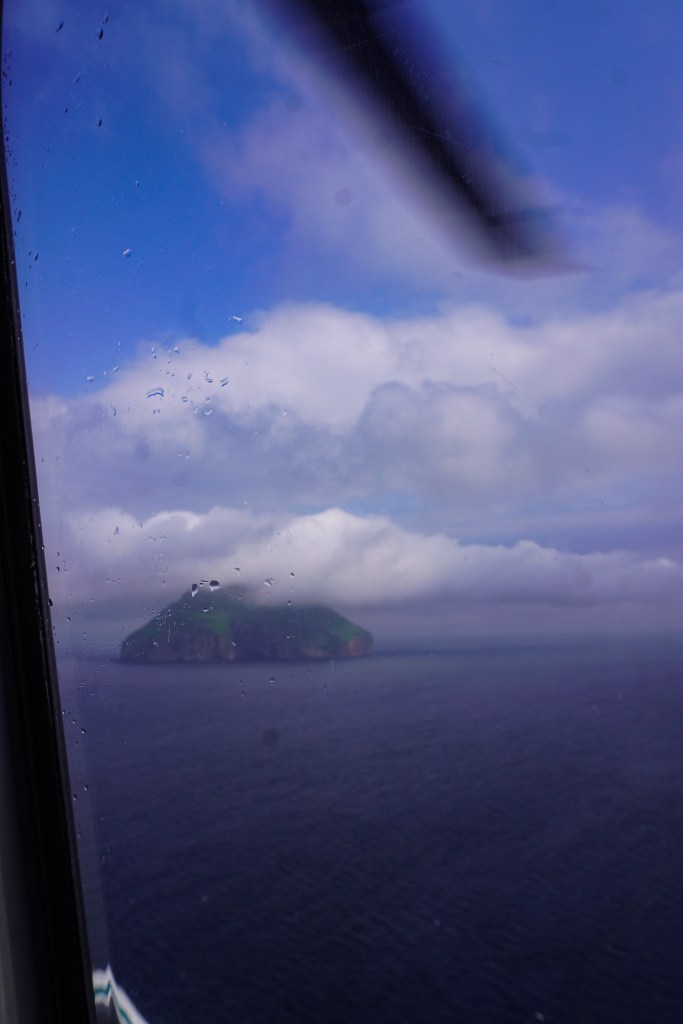
⛰️ Suðuroy: Helicopters, Sea Stacks & a Taste of Adventure
Suðuroy is the southernmost island in the Faroe Islands, and while it’s not on every traveler’s itinerary—it should be. Getting here is half the fun: you can either ferry your car over or do what I did—take a helicopter in and bus your way around like a minimalist adventurer. Spoiler alert: I have no regrets.
🚁 How I Got There (and Around)
I took the public helicopter from Tórshavn to Froðba, arriving around 12:30 p.m. From there, it’s a 20-minute walk to Tvøroyri, where both of the island’s bus routes operate:
- Route 700 covers the southern end
- Route 701 heads north
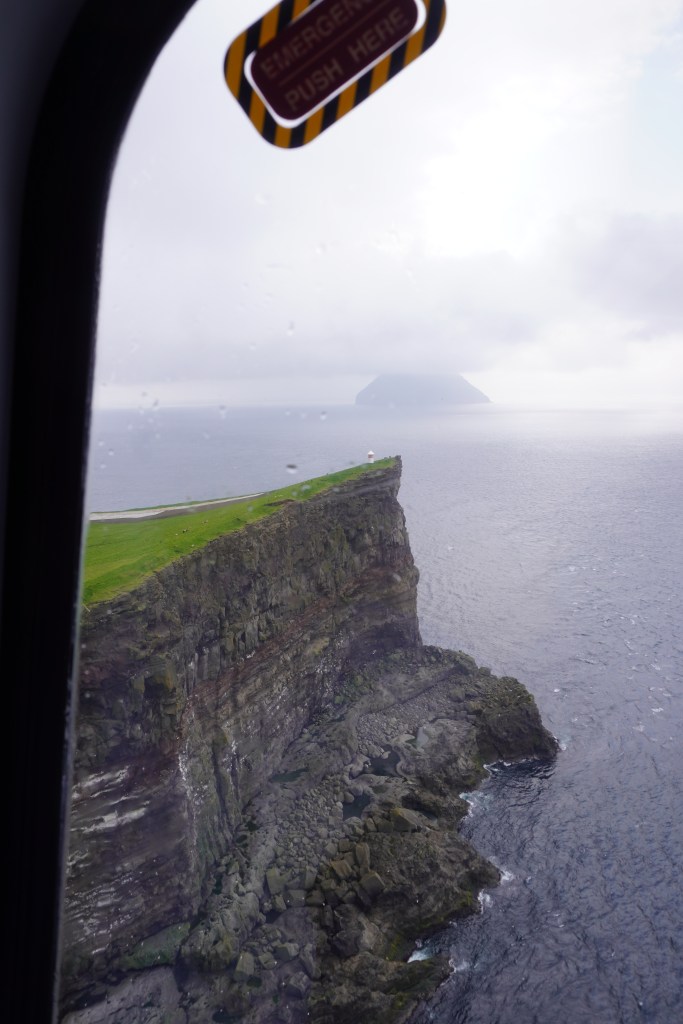
I hopped on Route 701 at 1:10 p.m., bound for Sandvík—my main goal being the Ásmundarstakkur trail. From the Sandvík bus stop, it’s an easy, flat 20-minute walk to the trailhead.
🚌 Pro Tip: Some stops require advance notice (at least an hour), so I let the driver know I wanted to be dropped at Øravík (the ferry terminal) on the return. The bus picked me up around 5:35 p.m., right on time.
I ended the day with a relaxing ride on the Suðuroy ferry, which departed at 6:00 p.m. It’s spacious, smooth, and even has a cafeteria with hot food. Once docked back in Tórshavn, it’s an easy 30-minute walk back to the helipad parking area—where I was joined by a few fellow day-trippers from the helicopter.
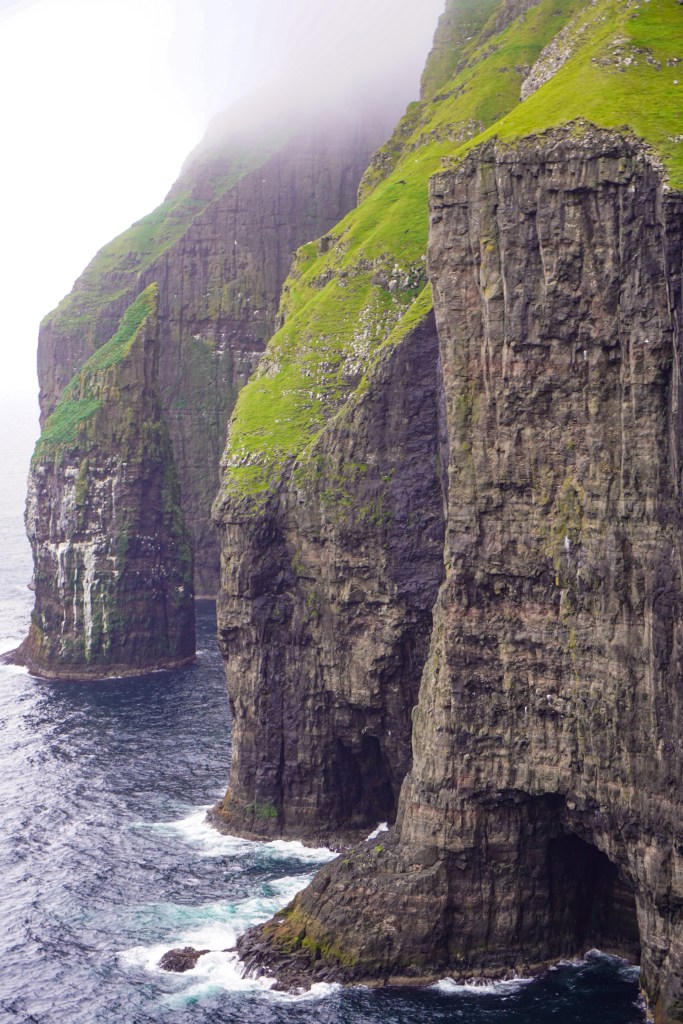
🥾 Ásmundarstakkur Trail
If dramatic sea stacks, towering cliffs, and a narrow bridge to a rocky summit sound like your idea of fun, this is your trail.
The weather was… let’s call it “atmospheric”—foggy, windy, and damp. I opted out of the bridge crossing (safety first), but after waiting patiently at the viewpoint, the fog parted just enough to reveal the epic sea stacks I came all this way for.
Even in poor weather, this hike was a trip highlight. And in good weather? I imagine it’s downright mythological.
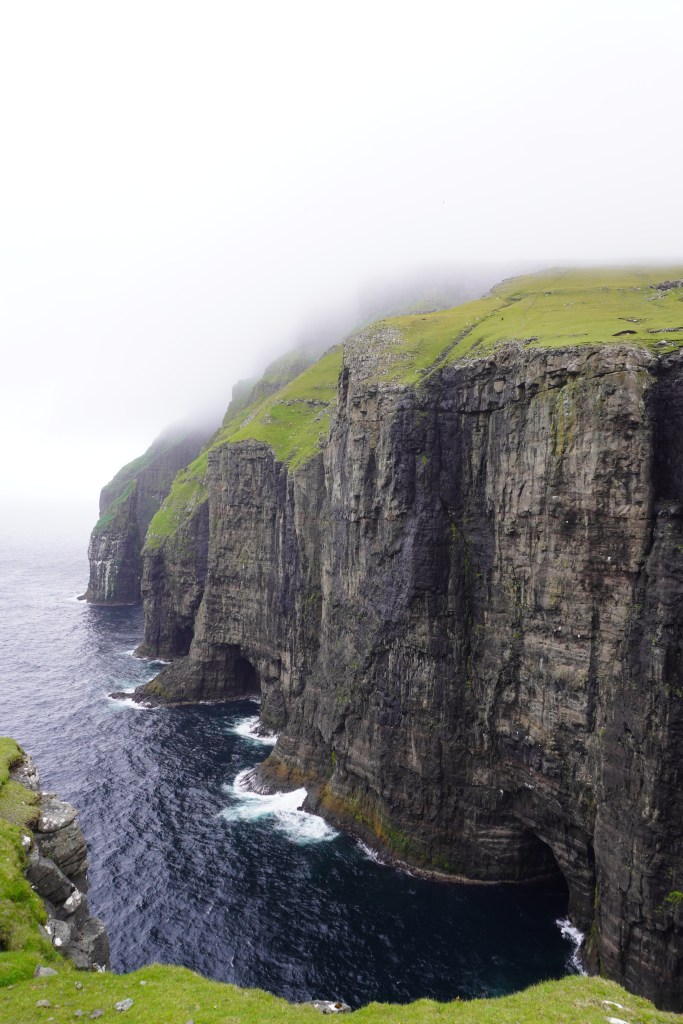
📍 Other Stops (If You Have Time or a Car)
If you plan to stay overnight or have your own vehicle on Suðuroy, here are a few more worthwhile spots:
- Røðin Viewpoint – Just outside Trongisvágur. Incredible views, but you’ll need a car—buses don’t get close.
- Vágur – One of the island’s largest towns. Great for dining, shopping, or finding a cozy place to stay.
- Sumba – The southernmost town in all the Faroe Islands, accessible via a one-way tunnel. The surrounding cliffs and viewpoints are wild and cinematic.
Pro Tip: When booking the helicopter to Suðuroy, you can book the ferry “standby” as an option in which you only pay for the rides you show for. This allows you to cancel your booking without having to formally cancel or take the route there if the helicopter is canceled.
Bordoy, Kunoy, and Viðoy, oh boy! 🏔️
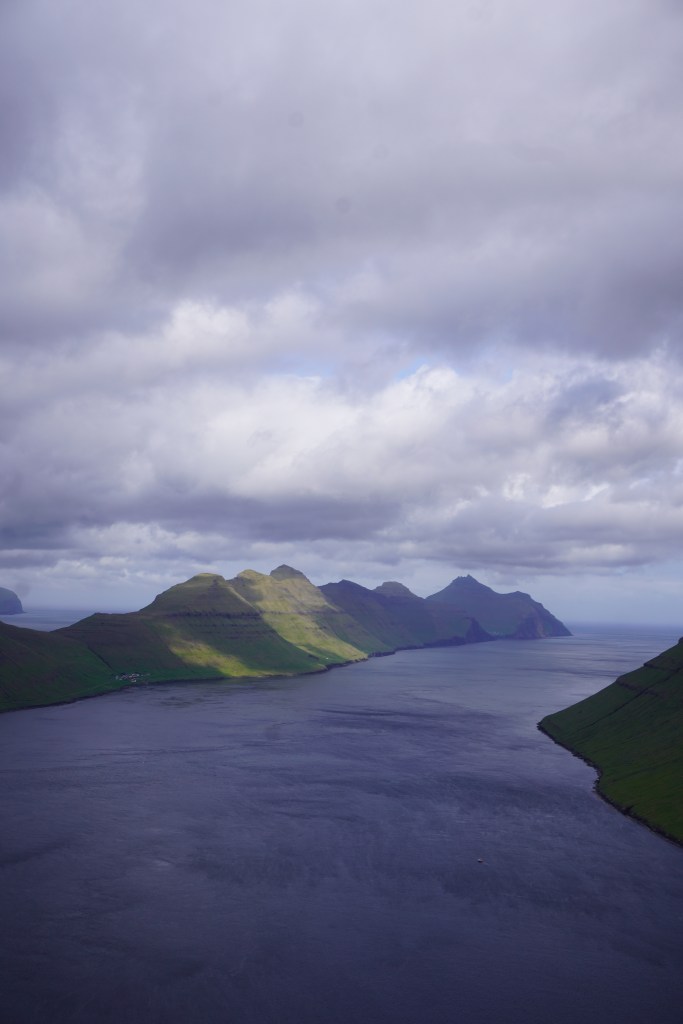
These three islands are easily accessible by car via the Norðoyatunnilin tunnel (Eysturoy to Borðoy) — 100 DKK round trip. Pro tip: dedicate a full day to exploring this trio and tack on the ferry ride to Kalsoy and back for a real island-hopping adventure. I took the free bridge from Streymoy to Eysturoy, then zoomed through Norðoyatunnilin straight to Klaksvík.
Bordoy
Klaksvík is the bustling hub here, offering ferry connections to Kalsoy, a handful of eateries, and grocery stores — the largest town in these eastern isles.
Klakkur Trailhead is your go-to for arguably the best view in the Faroes. Heads up — the wind at the summit is intense, but that panoramic payoff? Totally worth it. Bonus hack: many start the hike too early, parking near the town base or even where the open gate is, missing out on a shortcut. Drive past the open gate to a small pond where the real trailhead parking awaits, saving you a good chunk of uphill slog.

Viðoy
This island features a scenic loop road dotted with jaw-dropping viewpoints like Viðareiði and Malinsfjall. Keep your eyes peeled for the famous Highland cows grazing peacefully near Viðareiði — these fluffy locals make for a perfect photo op! I pulled off onto a little side road for a picture-perfect moment that’s hard to beat.
Kunoy
A tiny island connected to Bordoy by a free bridge, Kunoy is small but charming. It’s a quick stop with only two villages, but driving through the one-way tunnel to Kunoy village itself is a unique experience — something you won’t forget anytime soon!
Svinoy and Fugloy are additional small and very remote islands off the coast of Viðoy and if you have the time you can take the ferry to these as well.
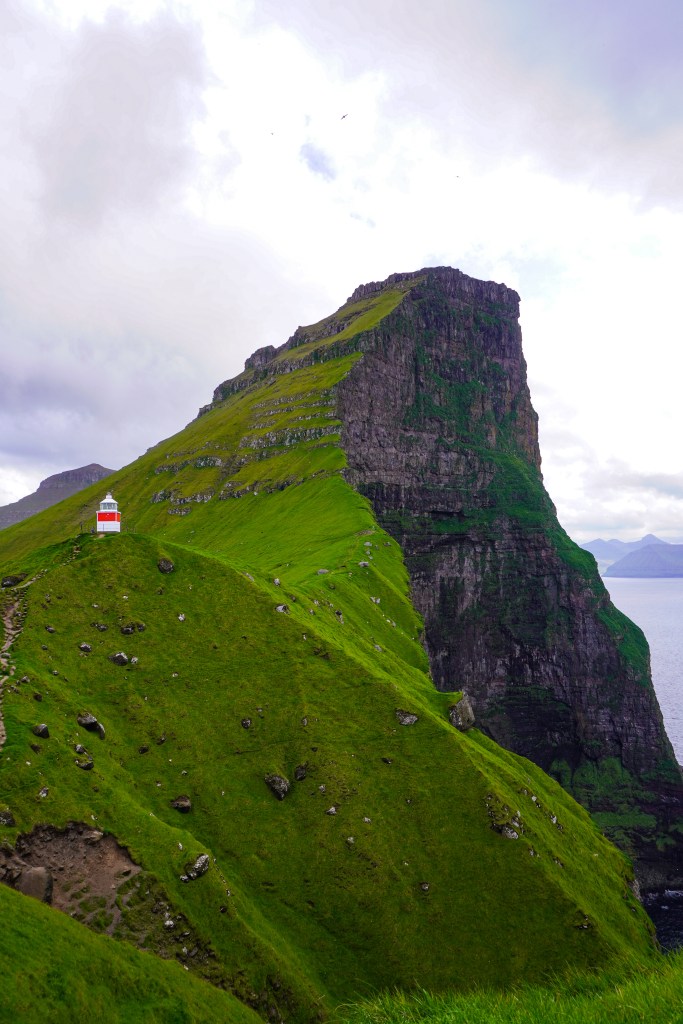
Kalsoy 🚢🌄
Kalsoy is one of the more remote islands and can only be reached by ferry from Klaksvík. Normally, you can reserve a spot to bring your car along, but when I went, the ferry’s car ramp was having technical difficulties — so I took the ferry on foot and hopped on the bus to Trøllanes for the famous Kallur Lighthouse Trail.
Kallur Lighthouse Trail 🏃♂️💨
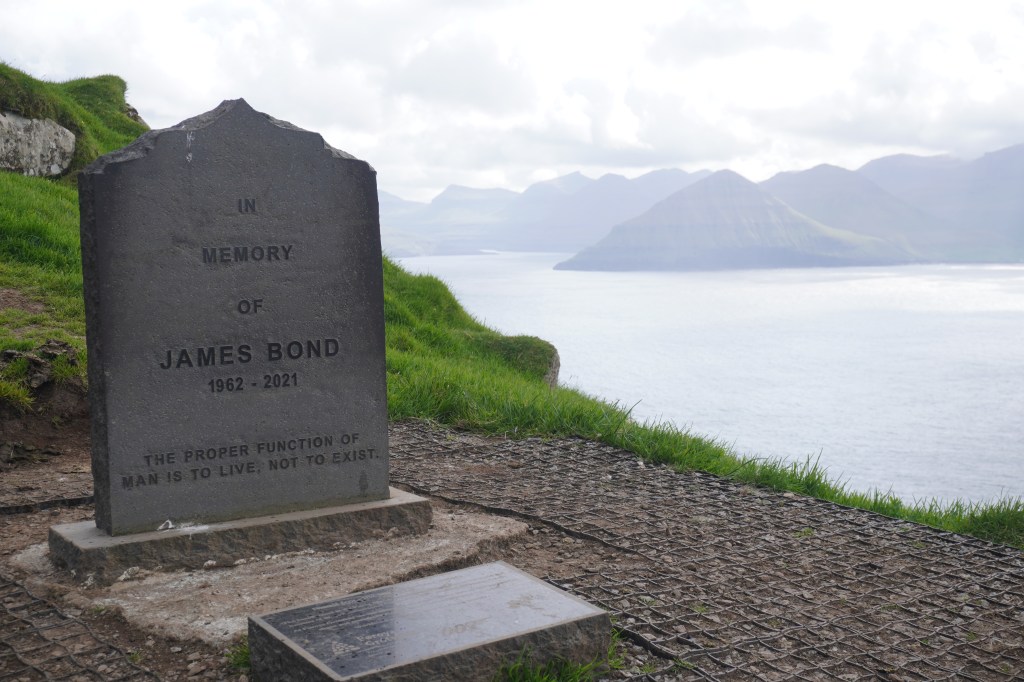
I made sure to stand right by the bus doors to be among the first off so I could snag my trail ticket early — it costs 200 DKK per adult, with half-price for those under 18. I wanted that iconic, crowd-free lighthouse shot, so I literally sprinted up the steep mountainside like never before. Others had the same idea, so it was a light run rather than a hike! This trail is an absolute must-do when visiting the Faroes. The view from the cliff is breathtaking, and—fun fact—this spot also features the “grave” of James Bond, 007, from the latest Daniel Craig films. Big Bond fan? This hike’s for you. Bonus: the ticket booth doubles as a fantastic Thai restaurant — definitely worth stopping by for a meal after your trek.
Mikladalur 🗿
My only regret was missing out on Mikladalur, home of the iconic Seal Woman (Kópakonan) statue. If I’d had my car, I would’ve squeezed it in, but relying on the bus made timing tricky. If you can, definitely stop to learn the haunting legend behind this famous Faroese figure—it’s a beautiful, sad story that adds rich cultural depth to your visit.
What to Pack for the Faroe Islands 🌧️
When packing for the Faroe Islands, bring true waterproof jackets and pants—not just water-resistant—as the weather is often wet and unpredictable. Sturdy hiking boots are a must for tackling the rugged trails, and wool socks and wool base layers are ideal since they handle moisture better and keep you warm even when damp. Layering is key, so pack plenty of extra warm layers. Because many areas are remote with limited amenities, I highly recommend carrying plenty of water— I brought a 40L water bottle—and packing your own lunch every day. Having access to a place with a kitchen to cook your own meals is a huge advantage; I brought packs of tuna and trail mix to keep me fueled on the go.
Good Luck!
Thanks for sticking with me through this Faroe Islands adventure — if you’ve got questions, drop a comment below! To make your trip easier, I’ve created a Google Map called Faroe Islands Trip 2025 with all the spots I covered, so you won’t end up on a random sheep farm by accident. And hey, if you loved this guide, stay tuned or subscribe — my next post will dive into the wild Ring Road of Iceland. Spoiler alert: it’s full of waterfalls, horses, and a few hot springs. Safe travels and don’t forget your rain jacket (you’ll need it)!
If you like the photos you see or want to stay up to date, you can also follow my instagram: faith.triplett


Leave a Reply