June 8th, 2025
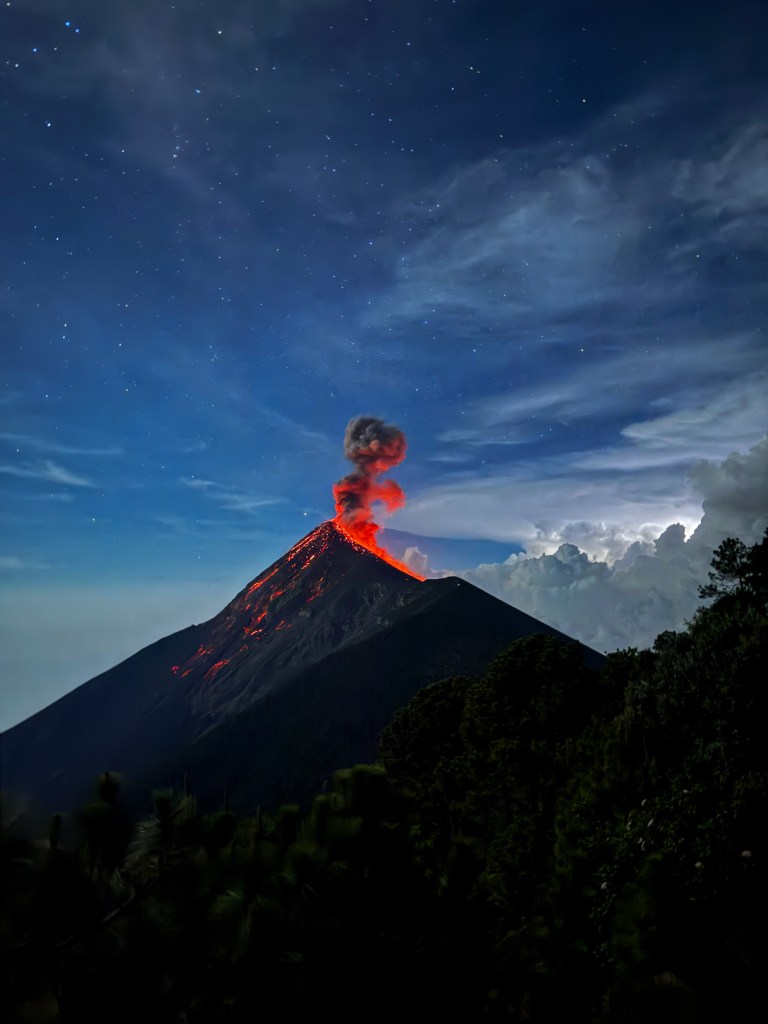
In just seven days, I explored some of Guatemala’s most unforgettable highlights—from the serene shores of Lake Atitlán to the cobblestone charm of Antigua and the adrenaline rush of hiking Acatenango Volcano.
In this guide, I’ll break down how to get around Guatemala, highlight must-visit destinations, recommend top tours and activities, and share helpful tips to make your trip smoother and more memorable.
Table of Contents:
- Let’s Talk Logistics
- Must-Visit Villages Along Lake Atitlán
- San Pedro La Laguna:
- San Juan La Laguna
- San Marcos La Laguna:
- Panajachel:
- The Optional—but Epic—Fuego Hike
- Sunrise Summit… or Not
Let’s Talk Logistics
The Shuttle Saga
I decided to shake things up and flip the classic Guatemala itinerary on its head. Instead of starting in Antigua like most guides suggest, I made a beeline straight to Lake Atitlán. Why? Because I wanted to be closer to the airport at the end of my trip—and more importantly, I wasn’t thrilled about spending a night in Guatemala City. As a solo female traveler, I’d read mixed reviews about the city, so I played it safe and steered clear.
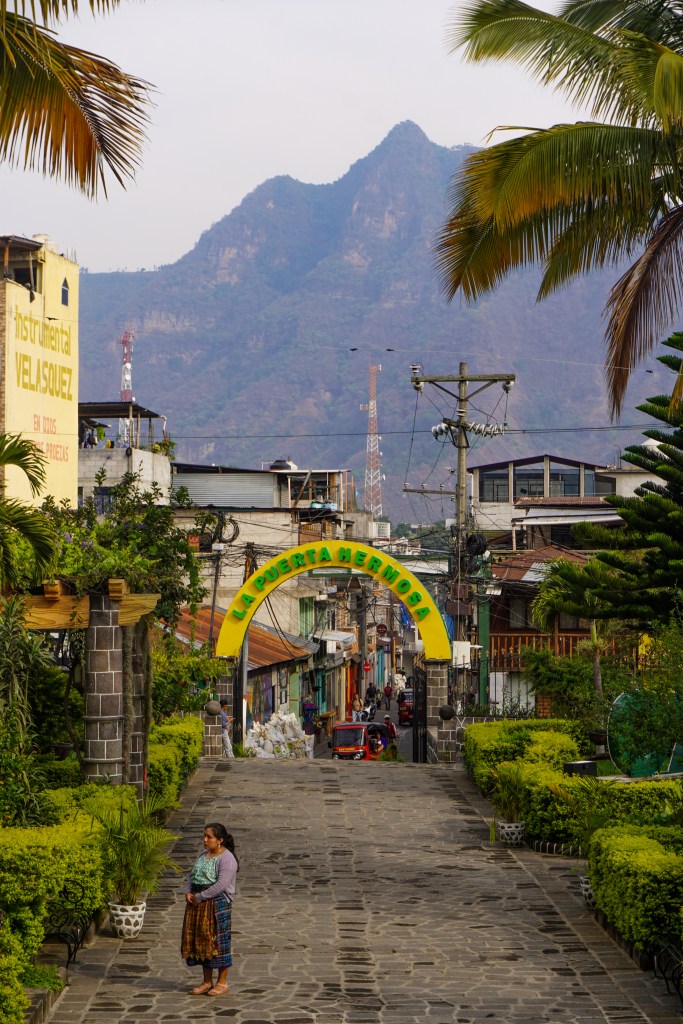
Now, geographically speaking, Antigua is only about an hour from the airport, while Lake Atitlán is closer to three. So my brilliant plan? Knock out the long haul right at the start. What I didn’t account for? The very real Guatemala traffic tax—aka, the extra two (or three) hours you should always budget for any drive here. Spoiler alert: my “three-hour” journey turned into a seven-hour odyssey.
I booked with Roadrunner, a popular shuttle service that offers both shared and private rides. Budget-wise, I opted for the shared version—and let’s just say, I got the full experience. My trip included an hour-long layover in Antigua to swap shuttles, multiple hotel pickup stops, and a generous dose of standstill traffic. If you’re tight on time or patience, splurging on a private shuttle (or even an Uber) is definitely worth it.
Am I complaining? Maybe just a little. But here’s the thing—traveling in Guatemala will take time. This isn’t a land of quick commutes and punctuality. And honestly? That’s part of the charm. As an American, I’m used to running at full speed, so adjusting to “Guatemala Time” is a reminder to slow down—even when it’s inconvenient.
Moral of the story? Embrace the chaos, pack snacks, and let go of your inner clock-watcher. You’re not just getting from point A to point B—you’re collecting stories along the way.
Lake Atitlán: Beautiful, Volcanic, and Logistically… Tricky
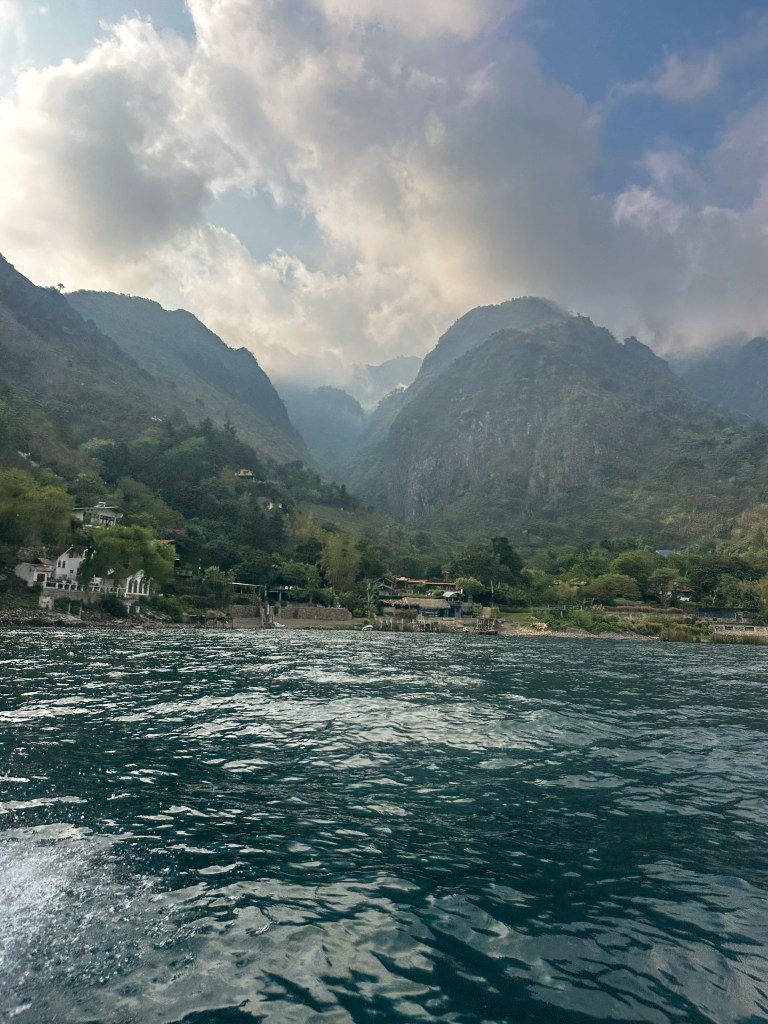
Lake Atitlán isn’t just a pretty face—it was born from a massive volcanic eruption that left behind a giant crater (called a caldera), which eventually filled with rainwater and mountain runoff. The result? One of the most jaw-dropping lakes in the world, surrounded by dramatic volcanoes and charming lakeside villages.
No matter which town around the lake you’re heading to, all shuttles will drop you off in Panajachel—the main transport hub. From there, you’ll hop on a lancha (water taxi) to reach towns like San Marcos, San Pedro, or Santa Cruz. But here’s the kicker: public boats stop running around 7 PM. After that, your only option is a private boat charter, which can cost 10x more.
A typical water taxi shouldn’t cost more than 25 quetzals, but a private ride? Expect to shell out 250–350 quetzals. I, unfortunately, learned this the hard way.
Thinking I was being proactive, I arranged a private boat through a guy my hostel recommended. My shuttle dropped us at a random dock, and surprise—no boat, no contact, no clue. I tried to cancel, but with my broken Spanish and a very confused boat guy on the other end of the phone, it didn’t go well. Eventually, I gave up and stuck with fellow travelers from the shuttle. Six of us split a private boat for 150 quetzals each, which worked out… until the original boat guy showed up at my destination dock, furious and demanding full payment.
So there I was—alone, tired, and stuck with an angry stranger refusing to let me leave until I paid him 350 quetzals. After I realized arguing wasn’t worth my safety, I handed him the cash.
If there’s even a chance you might arrive late, stay the night in Panajachel or buddy up with other travelers to split a private boat. And if you’re a solo female traveler, I’d strongly recommend not cutting it close to sunset. This was hands-down the most stressful part of my trip, and it’s definitely avoidable with a little planning.
Helpful Travel Tips:
- Water Taxis: during public boat hours (8am–5pm, or until 7pm for Panajachel), you should never pay more than 25 quetzals one-way. If you’re visiting a town later in the day, always confirm the last departure time with the boat driver—these can vary between 4:30 and 5:30pm, depending on the destination.
- Avoid Scams at the Dock: You do NOT need to prepay for water taxis. If someone approaches you at the dock asking for payment before boarding, politely ignore them and walk directly to the boats. Tell the driver where you’re headed—he’ll direct you to the right boat if needed. Pay only when you get off the boat, and hand the fare directly to the driver. If you don’t have exact change, they’ll likely assume you’re paying the standard 25 quetzals.
- Tipping: Tipping isn’t expected for taxis or water taxis, but it’s appreciated for guided tours and activities, especially when your guide goes above and beyond.
Must-Visit Villages Along Lake Atitlán
Lake Atitlán is dotted with charming towns and hidden gems, and if you’re staying more than a couple of nights, it’s well worth exploring beyond your home base. In this post, I’ll focus on the most notable ones:
- San Pedro
- San Juan
- San Marcos
- Panajachel
San Pedro La Laguna:
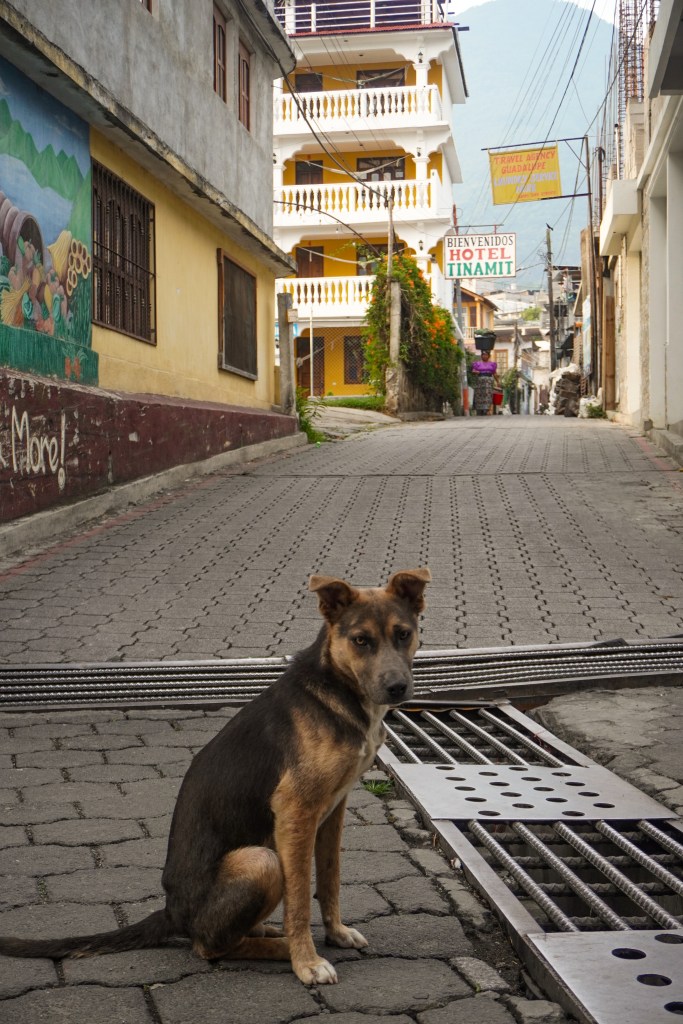
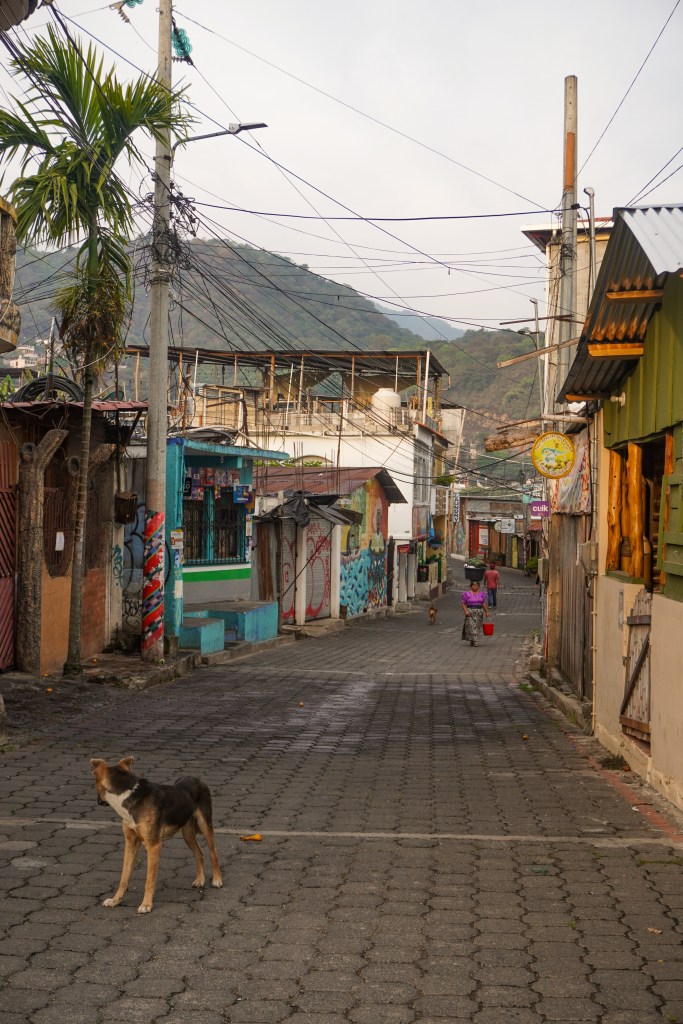
Of all the towns I visited around the lake, San Pedro easily stole my heart. It’s a bit less touristy than San Juan and I was able to witness more of Guatemalan life. I woke up early and decided to explore the town before everyone woke up, it was a peaceful experience I’d highly recommend, and the empty streets made for some stunning photos. Not long into my walk, I made an unexpected friend: a local pawsporter who trotted up beside me and became my loyal companion for the morning (see picture). We wandered San Pedro’s quiet streets together, and when I stopped into a tiny bakery for a chocolate muffin, I shared a bite with my four-legged travel buddy. It was one of those simple, unplanned moments that made the town feel truly unforgettable.
While I didn’t book any activities ahead of my trip to the lake, one of the perks of traveling solo is the flexibility to join things last-minute—and that’s exactly what I did. On my early morning walk, I stumbled upon a small building advertising traditional Mayan cooking and weaving classes. A quick message to the owner on WhatsApp, and I was set to join a cooking class the very next day.
Later that morning, I also spotted a small local tour agency offering group excursions to a nearby coffee plantation and honey farm. If you’re open to a bit of spontaneity, opportunities like these are easy to find and often lead to some of the most memorable experiences.
Mayan Cooking Class at Anita’s Mayan Kitchen
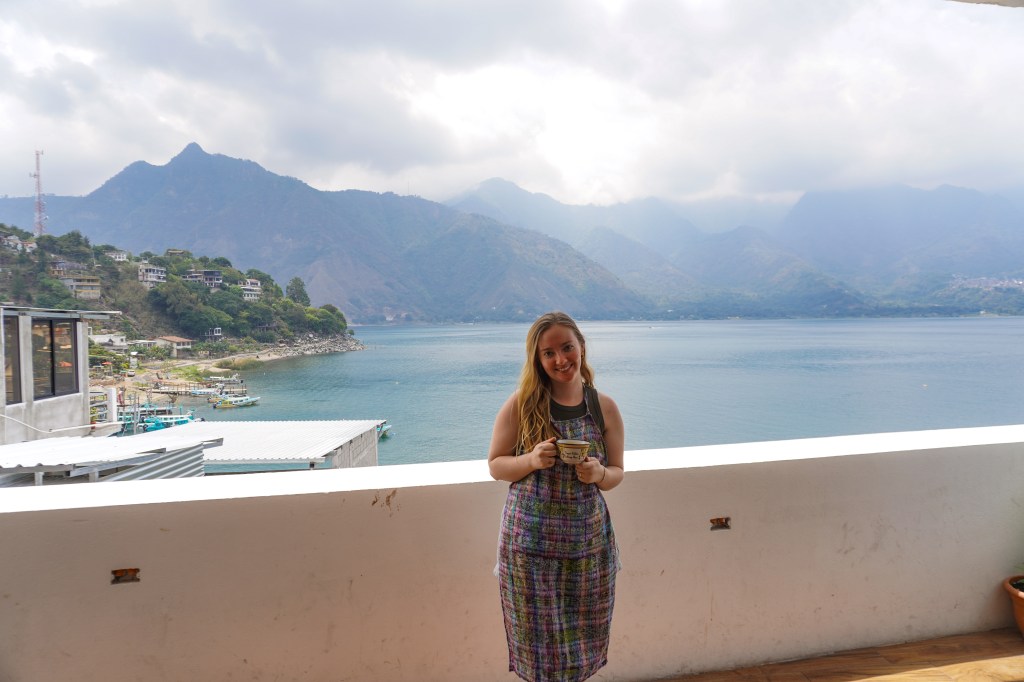
If there’s one experience in San Pedro you shouldn’t miss, it’s Anita’s Mayan Cooking Class. From homemade guacamole and Mayan green stew to tamales, radish salad, pineapple juice, and two incredible plantain-based desserts—this class is a feast in every sense of the word.
I’ll admit, cooking classes hadn’t really been on my radar while traveling. But after this unforgettable experience, they’re officially on my must-do list. Anita meets you right near the San Pedro dock and starts by sending you her full menu of options. Our group couldn’t decide what to cook, so we asked Anita what meal she felt was most meaningful. She suggested a traditional green stew typically made for sharing with friends on special occasions, and we were all in.
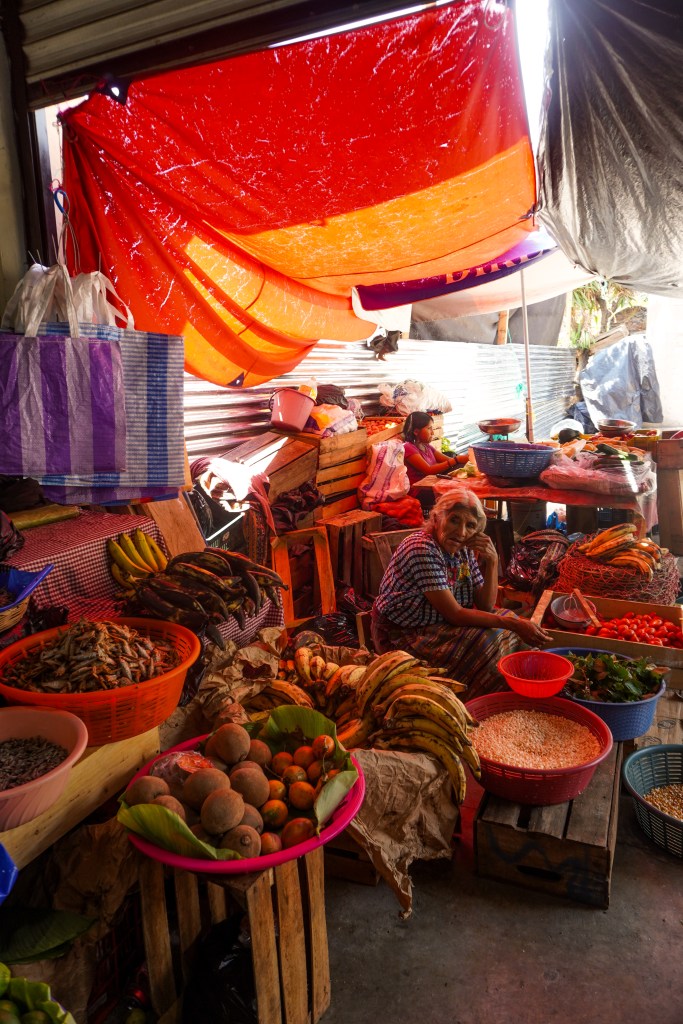
From there, we hopped into the back of a pickup truck outfitted with railings for standing (a surprisingly fun ride) and headed to a local market far removed from the tourist scene. Anita chooses this market specifically to support older women vendors who have struggled in recent years. She spoke to us about her commitment to sustainable tourism—how her growing business allows her to pay more for the goods she sources, directly benefiting those women.
This market was an experience in itself. You won’t hear much Spanish here—locals speak Tzʼutujil, one of the Mayan languages—and Anita taught us a few simple words so we could greet people respectfully. We helped her shop for the day’s ingredients, carrying our haul in bright, locally made baskets. I even picked up a few slabs of pure cocoa for baking.
Back at her open-air kitchen—which, I swear, looked like a scene straight out of Eat Pray Love—Anita laid everything out beautifully for that perfect Instagram moment before we got to work. With prep stations set up for chopping, roasting, blending, and more, she had us rotating roles so everyone got hands-on experience with each step. She introduced us to vegetable prep techniques that were totally new to me—honestly, mind-blowing in their simplicity and flavor.
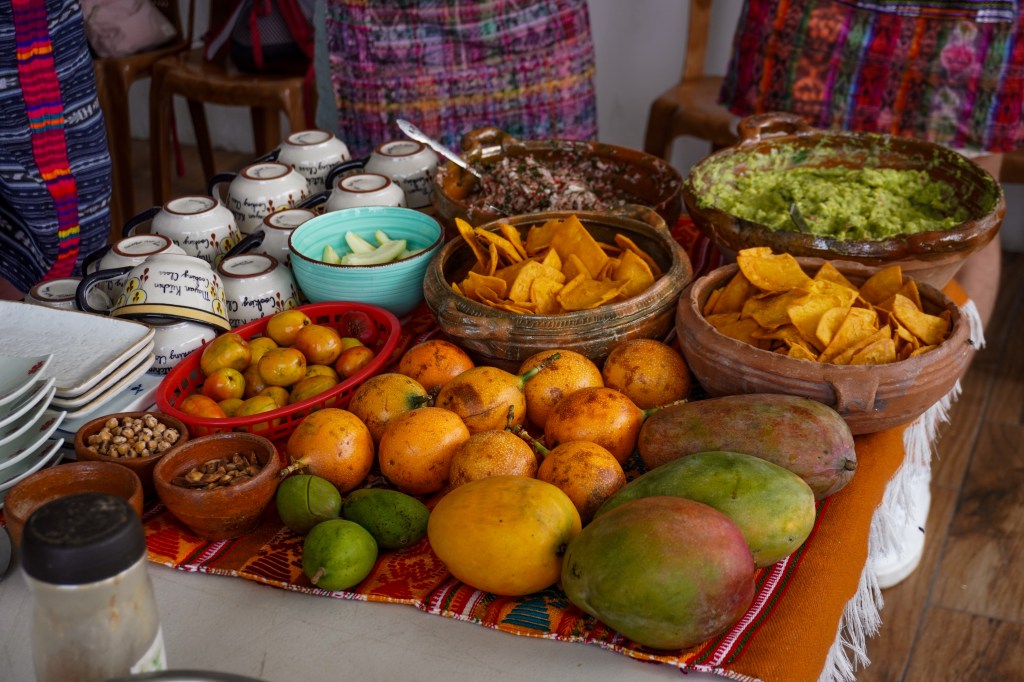
While the meal cooked, we enjoyed a spread of appetizers: fresh tortilla chips with guac and radish salad, seven varieties of mango with a savory pumpkin seed dip, and strong Guatemalan coffee. It was the kind of food that makes you pause after every bite.
The class ended with a big family-style lunch at a long communal table. Anita shared her life story as we ate, and there were more than a few teary eyes at the table. It was the kind of authentic, heartfelt experience that lingers long after the meal is over.
San Juan La Laguna
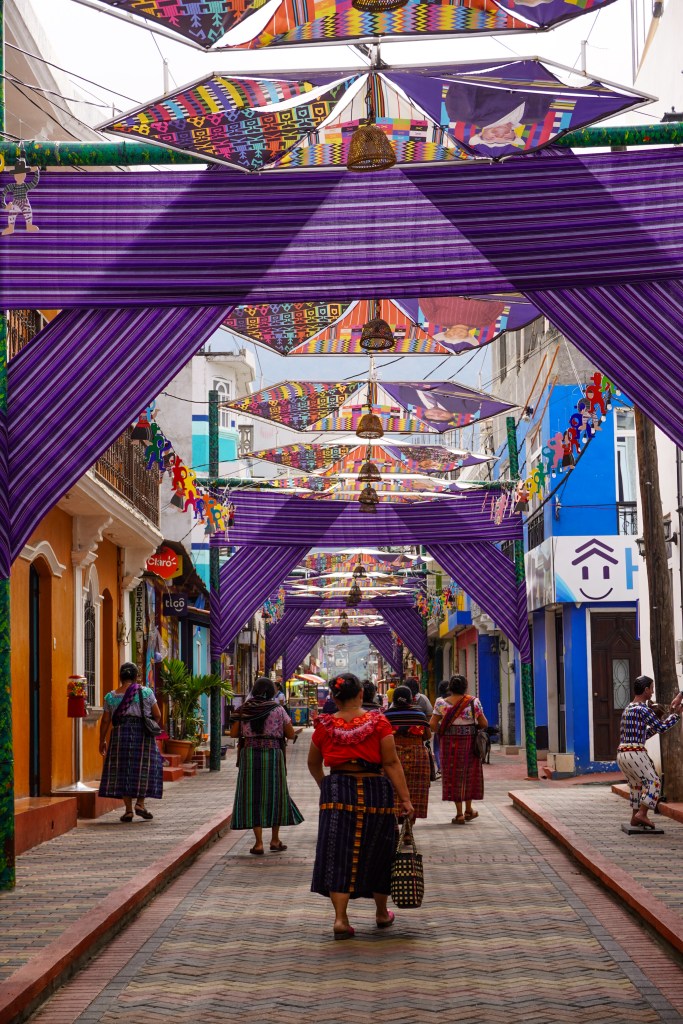
San Juan is without a doubt the most stunning of the towns along the lake filled with colorful murals depicting Mayan culture, painted roads, umbrella and sun-hat roofed streets, and ribbons hung between buildings. I decided to just explore the town on foot and visit the countless vendors selling handmade art. While here I picked up a painting and several pieces of beadwork including an intricate necklace to hang in my room, a hair pin, and an ornament. After my cooking class and a lesson on sustainable tourism, I chose not to haggle a lot with vendors for their art as most things are very affordable even at the tourist price and can often make a huge difference in the life of another if I pay a bit more.
Coffee, Co-ops & Motorbike Rides
After a filling hostel breakfast, I popped into a local tour agency to ask about a coffee plantation tour. Thanks to traveling in the shoulder season, I snagged a private tour for just 250 quetzals (transportation included). The agent started to flag down a tuk-tuk but then shrugged and said, “Want to hop on my motorcycle instead?” Obviously, I said yes.
Riding through the streets on the back of a local’s bike, wind in my face, was half the fun. Locals smiled as we zipped by—clearly amused that I was having the time of my life.
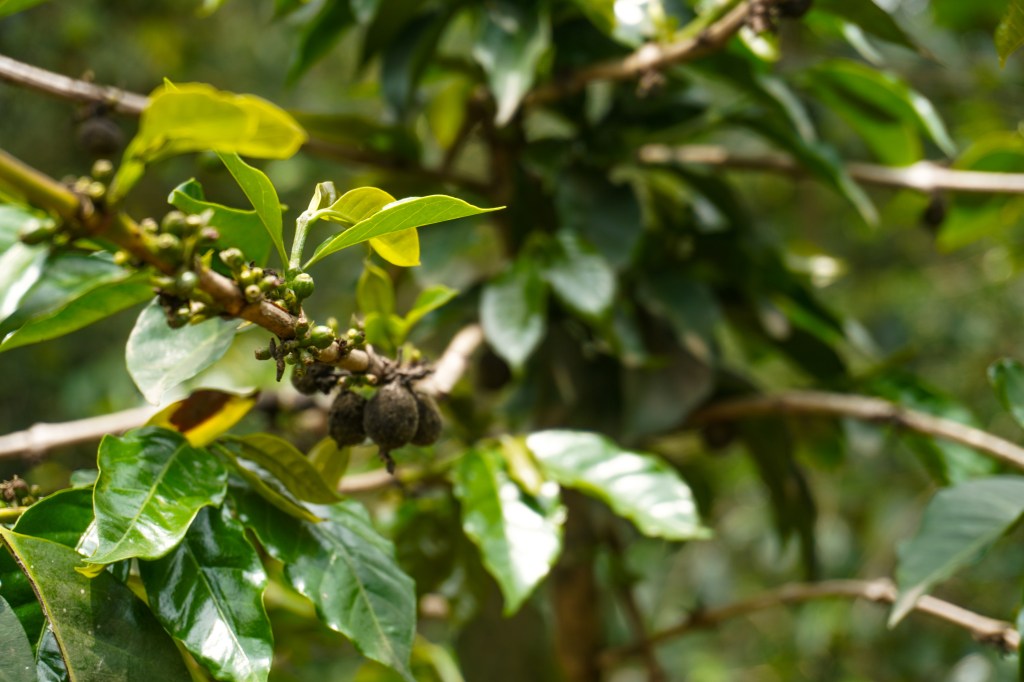
The tour itself was eye-opening. We walked through coffee fields as my guide broke down everything from bean types and harvest stages to how altitude affects flavor. As a self-proclaimed coffee addict, I was shocked by how little I actually knew.

Next stop: the co-op, where beans are washed and processed for local sale. Over 70 farming families use this community-run facility, and decisions are made in town hall-style meetings—a great example of sustainable, local-first business.
We wrapped up with a coffee tasting. It was a hot day, so I went with an iced coffee and kicked back with a view of the mountains blanketed in coffee farms.
A few other things to do I heard from travelers at my hostels:
- Honey-bee farm tour
- Jewelry making classes
- Chocolate shops
- Catch a local basketball game
- Paddle boarding
- ATV tours
- Mountain Hikes
San Marcos La Laguna:
“New Age Hippies meet ancient Mayan culture” – is what I thought as I departed the dock of San Marcos. Of all the towns I visited around Lake Atitlán, San Marcos was probably my least favorite. While undeniably charming and visually appealing, it had a distinctly expat-heavy feel—mostly European and American travelers who seem to have settled in and rebranded the town in their image.
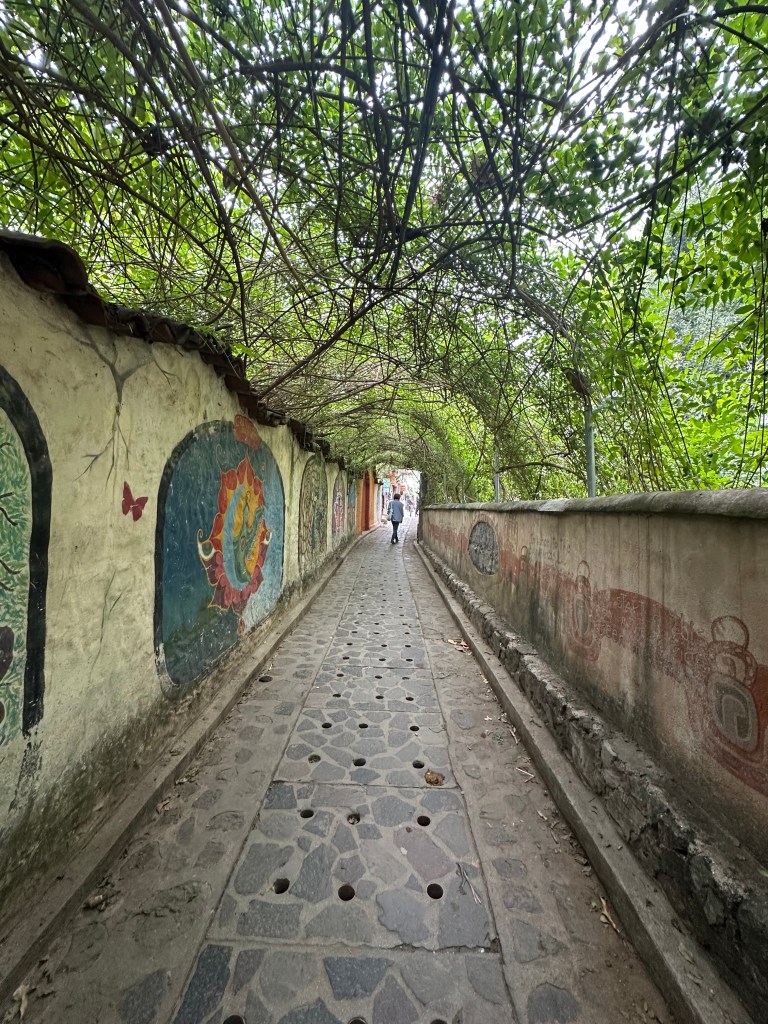
That said, I’d still recommend a visit—just with a bit of intention. Skip the trendy non-local cafés and boutiques and head further into town, where I found a few Guatemalan-owned businesses tucked away from the main strip. I grabbed a smoothie at a small local restaurant and appreciated the quieter, more authentic side of San Marcos.
One bright side: massages here are affordable and easy to find. But overall, the town gave off strong signs of gentrification, and I couldn’t shake the feeling that the original culture was being overshadowed.
I only spent a few hours in San Marcos before heading back to enjoy the evening with some fellow travelers I’d met at my hostel—but if you’re in town, one activity worth noting is the cliff jumping. Just a short walk from the dock, you’ll find a jumping platform with two height options—6 feet and 13 feet—for just 20 quetzals. Friends who went said it was a fun adrenaline rush, though a wrong landing might leave you a little bruised. I decided to pass, saving my energy for a big hike ahead.
Panajachel:

After a hearty breakfast at my hostel and a morning swim in the lake I departed to Panajachel to catch my shuttle to Antigua at noon.
Panajachel, often referred to as “Pana,” is the largest of the towns along the lake and often regarded as the entry point to the lake. It’s a bustling town with a more commercial vibe compared to the smaller lakeside villages, but it’s still worth exploring, I would recommend a half-day.
While it may not have the laid-back charm of places like San Juan or San Pedro, Panajachel has a wide variety of restaurants, markets, and easy access to transportation. While wandering through the local markets, I noticed a distinct lack of tourists—which meant the vendors were noticeably more persistent. Still, it made for an authentic experience. I recommend grabbing some gelato and wandering into a few of the town’s beautiful hotels—many feature lush garden courtyards that are perfect for a quiet coffee or a relaxed meal.
Antigua
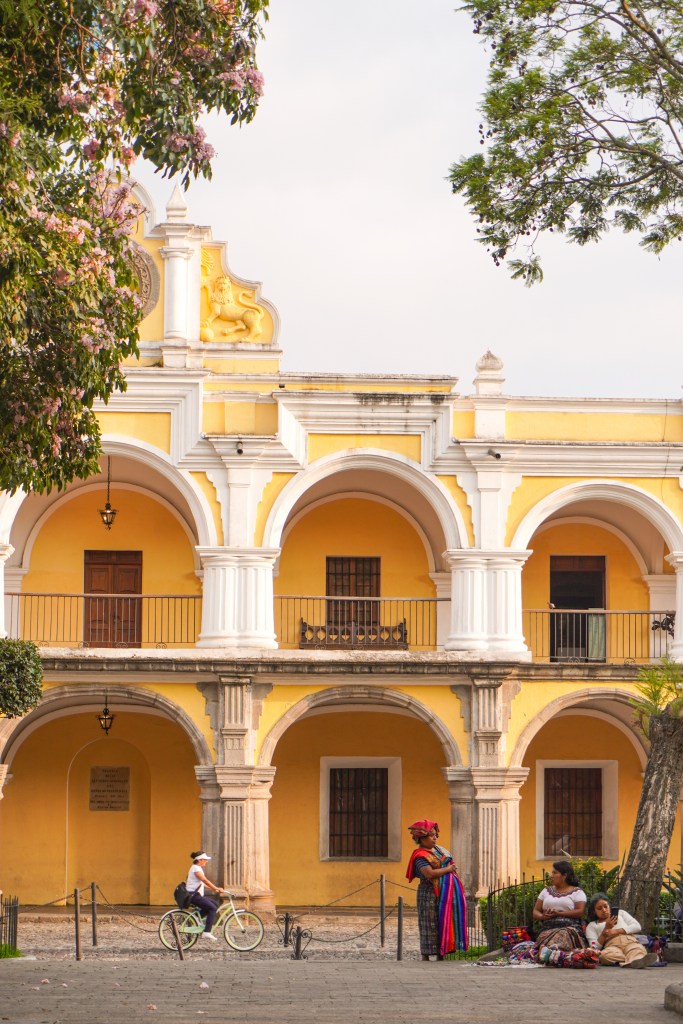
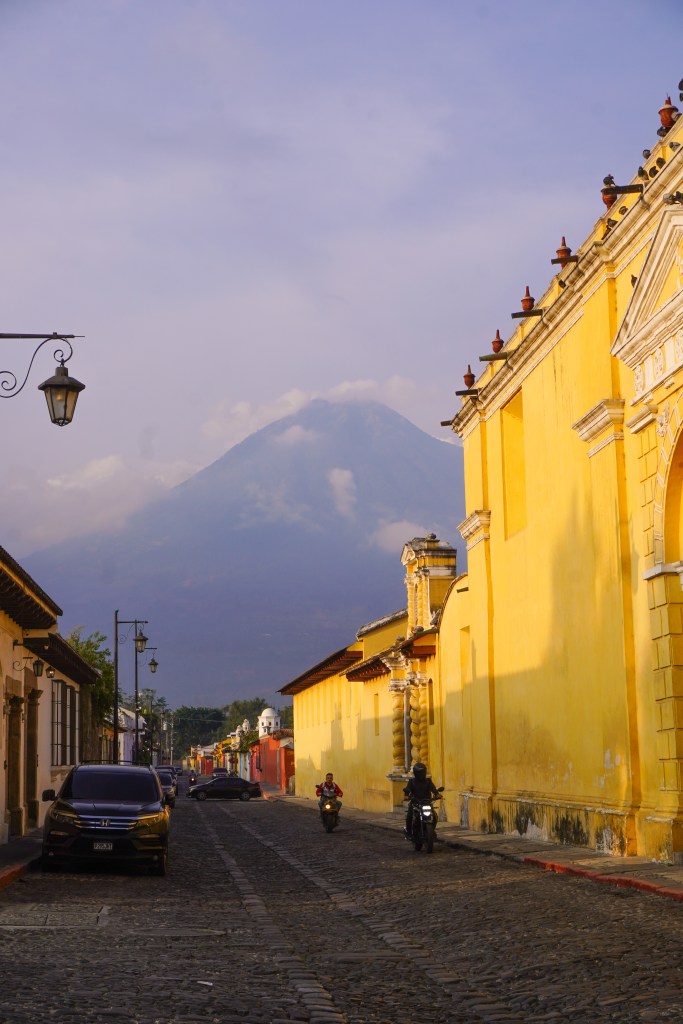
Picturesque and Historical Antigua. As soon as l had checked in to my hostel I was off to explore. Antigua is perfect for walking everywhere and there’s historic sites and picturesque photo-ops at every corner. I recommend exploring Antigua without an itinerary and by foot and just see where the day takes you, however, if you’d like recommendations for things to see and do, read on..
Top Things to Do in Antigua, Guatemala
1. Santa Catalina Arch: One of the most iconic sights in Antigua – can get a bit crowded, but if you time it right you can get great photos.
2. Antigua’s Central Park: The heart of the city, surrounded by colonial architecture, cathedrals, and local life. A great place to people-watch and enjoy street performances.
3. Cerro de la Cruz: A short hike or tuk-tuk ride takes you to this viewpoint overlooking Antigua’s colorful buildings and surrounding volcanoes.
4. Antigua Guatemala Cathedral (Catedral de San José): Located on the edge of Central Park, this historic cathedral features beautiful ruins and preserved history
5. Explore Ruins: Antigua is filled with earthquake-damaged colonial churches and convents that have been left partially in ruins:
- Santa Clara Convent
- Convento de las Capuchinas
- Iglesia y Convento de la Recolección
6. Visit Markets: Check out the Artisan Market (Mercado de Artesanías) for handcrafted textiles, jewelry, and souvenirs—or visit the bustling Municipal Market for a more local vibe.
Eat Everything
The food scene in Antigua? Absolutely incredible. I had some of the best meals of my trip here, and I’m not exaggerating. From flaky croissants and rich Guatemalan coffee to upscale bistros and traditional Guatemalan dishes, everything was worth trying.
My advice? Splurge on food in Antigua.
It’s the perfect place to indulge—whether you’re sitting in a leafy courtyard with live music, savoring a tamale wrapped in banana leaf, or cooling off with fresh gelato (just maybe skip the carts—food safety can be hit or miss).
4. Acatenango Hiking Tour
There are plenty of tour companies offering hikes up Acatenango, but I wanted to be intentional about who I booked with. Supporting Guatemalan-owned businesses and engaging in sustainable tourism was important to me—especially for such a meaningful experience.
After some research, I landed on V-Hiking Tours, a locally owned company run by a mother-son duo. The son organizes and leads the tours with a team of local guides, while his mom helps prepare the meals. It felt good knowing my money was directly supporting the community.
What to Expect with V-Hiking Tours
First, fair warning: this is not an easy hike. It’s demanding, steep, and requires a decent level of fitness—especially if you’re considering hiking beyond base camp to Fuego or the summit at sunrise.
V-Hiking tours makes the experience as smooth as possible. They offer shuttle pickup from three different locations in Antigua, and the day starts at their headquarters just outside the city. Here, you’ll meet the rest of your group (around 20 people), enjoy a hearty local breakfast, and get fitted with any gear you need.
They have a fully stocked gear shop where you can rent jackets, backpacks, gloves, hiking poles, headlamps, and more. Trust me, a lot of people showed up underprepared—this rental shop saved them. I personally rented hiking poles and a warm jacket for the freezing night temps. Rentals were reasonably priced (10–50 quetzals), and the option to only pay for what you need keeps the overall tour cost lower.
You’ll also be given a packed lunch to carry in your backpack, and you can safely store extra luggage and valuables at their base in a locked room.
Base Camp: Volcán de Fuego in Full View
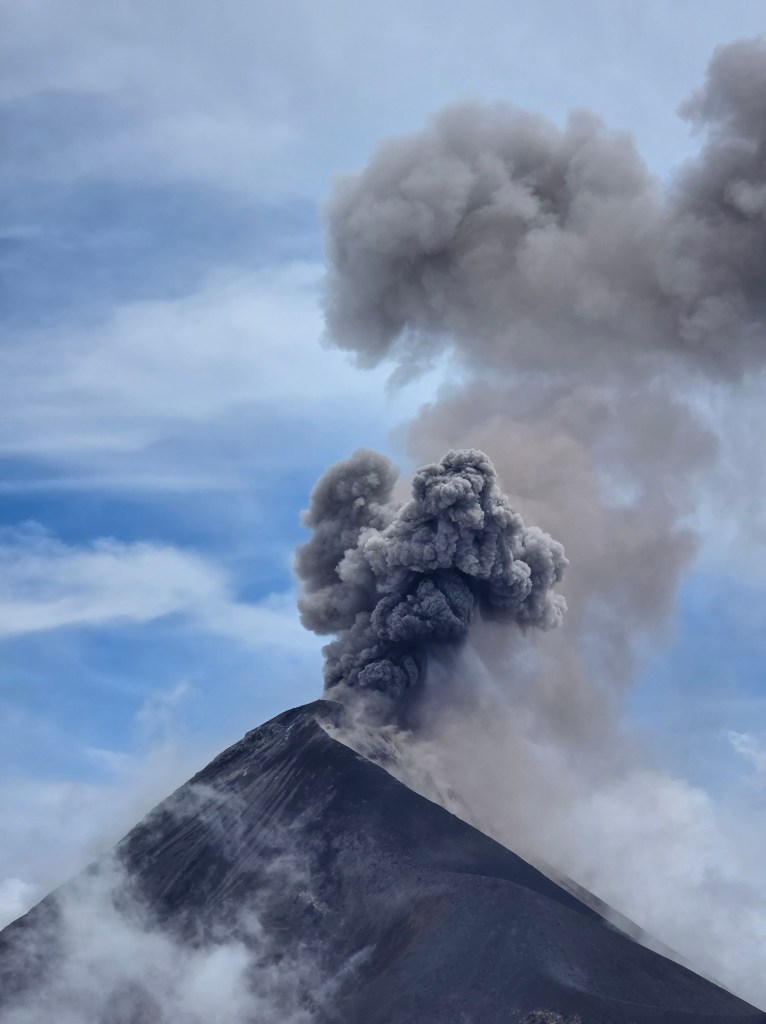
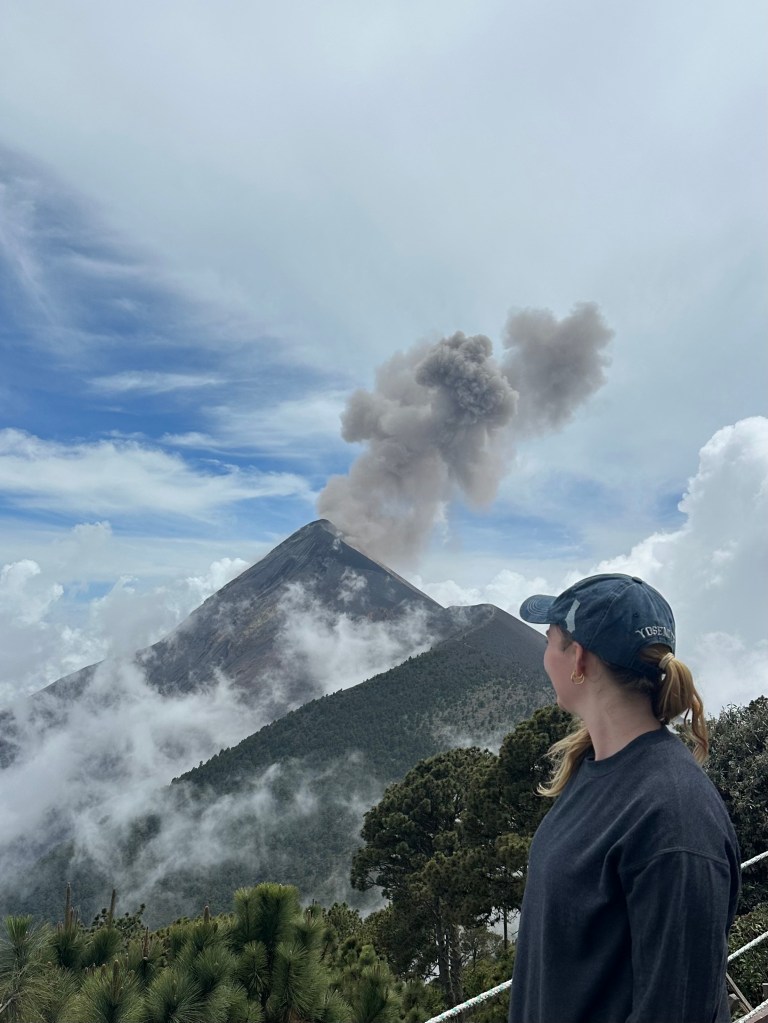
Reaching base camp was an emotional mix of exhaustion and awe. As soon as we arrived, the clouds cleared and we were treated to the dramatic sight of Volcán de Fuego erupting in the distance, shooting ash and smoke into the sky.
Depending on your group’s pace, you’ll have about two hours of downtime at camp. V-Hiking provides simple but cozy cabins, each with a huge window facing Fuego, so you can literally watch a volcano erupt from your bed.
I shared a cabin with a sweet German couple (shared cabins are included), but you can also upgrade to a private cabin for around 200 quetzals extra. After settling in, we finally devoured our packed lunches and soaked in the views.
I took some time to rest before deciding whether to join the optional hike to Fuego’s summit—which, spoiler alert, is grueling but unforgettable.
The Optional—but Epic—Fuego Hike
If you’re feeling ambitious, there’s an optional add-on to hike Volcán de Fuego from base camp. The cost is 200 quetzals, but you don’t have to decide right away—you can choose at base camp once you see how you feel. Just note: once you reach a certain point on the trail, you’re committed to paying, even if you don’t make it to the summit.

Let me be real with you: this was hands-down the hardest hike I’ve ever done.
And I say that as someone who regularly works out, hikes, and plays tennis. Maybe it was exhaustion from days of travel, maybe it was the altitude—but nothing prepared me for Fuego.
The trail is brutal: loose volcanic ash that slips beneath your feet with every step, steep inclines, and no switchbacks to ease the climb. You first descend part of Acatenango, then ascend Fuego, and do the reverse in the dark on the way back. It’s a grind—mentally and physically.
But the view at the top? Pure magic.
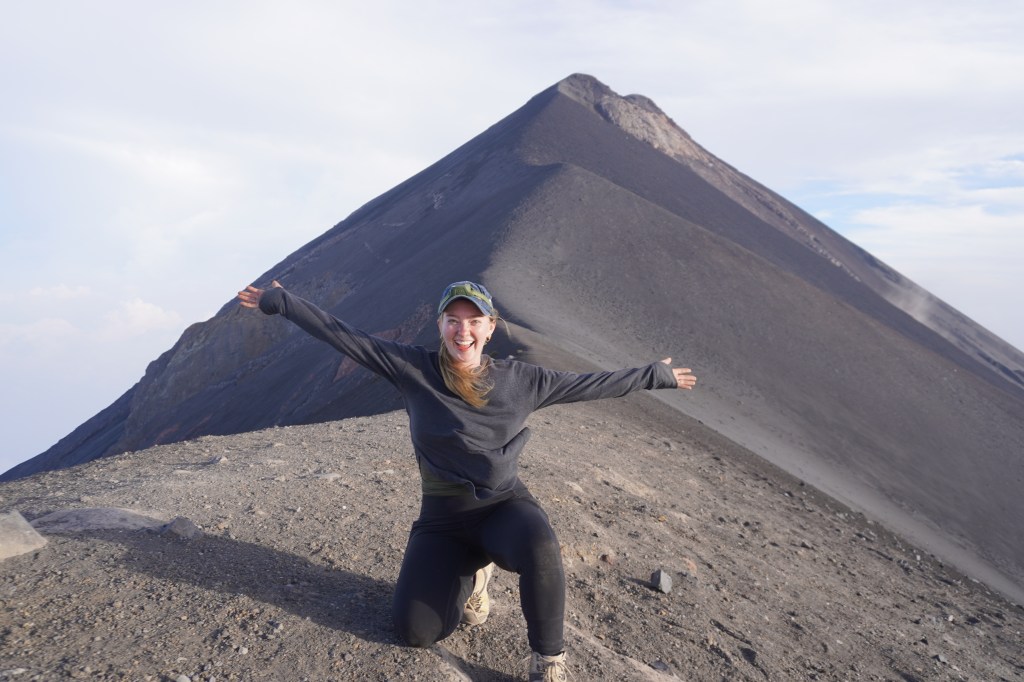
Once we arrived to the top it was nothing short of incredible. I was quite literally floating on cloud nine
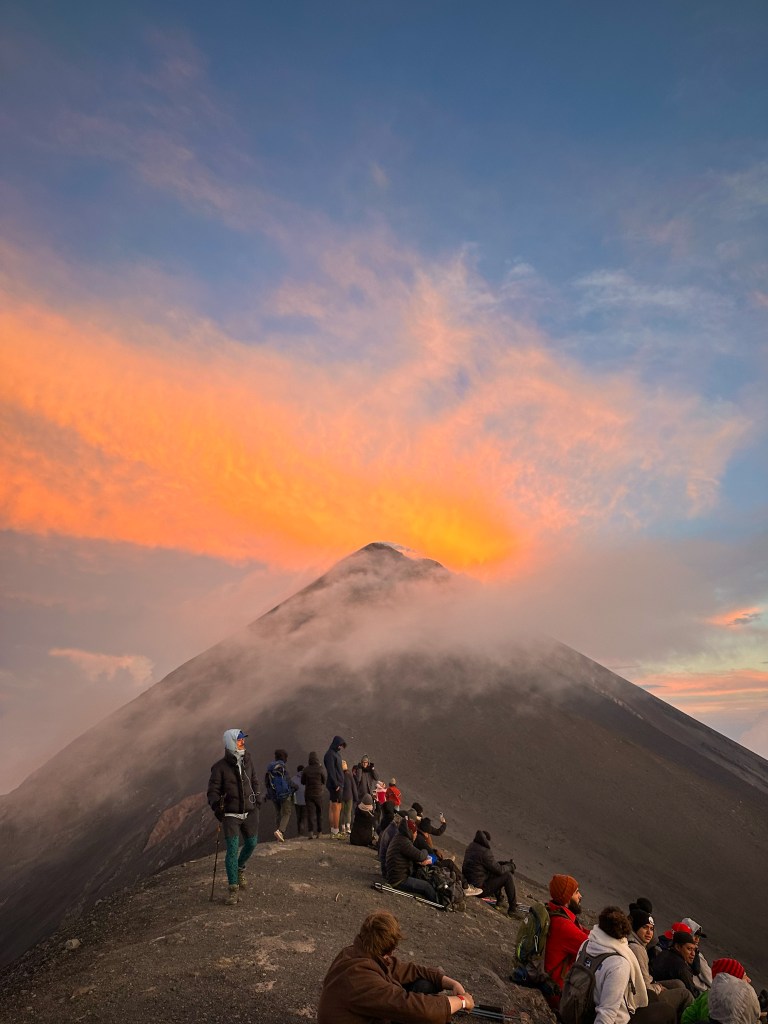
On Cloud 9… Literally! Standing above the clouds surrounded by the silhouettes of distant volcanoes while watching the most unforgettable sunset of my life. The sky turned from orange to deep pink as Volcán de Fuego loomed beside us. It was one of those rare, tear-worthy moments—where nature leaves you completely undone in the best way.
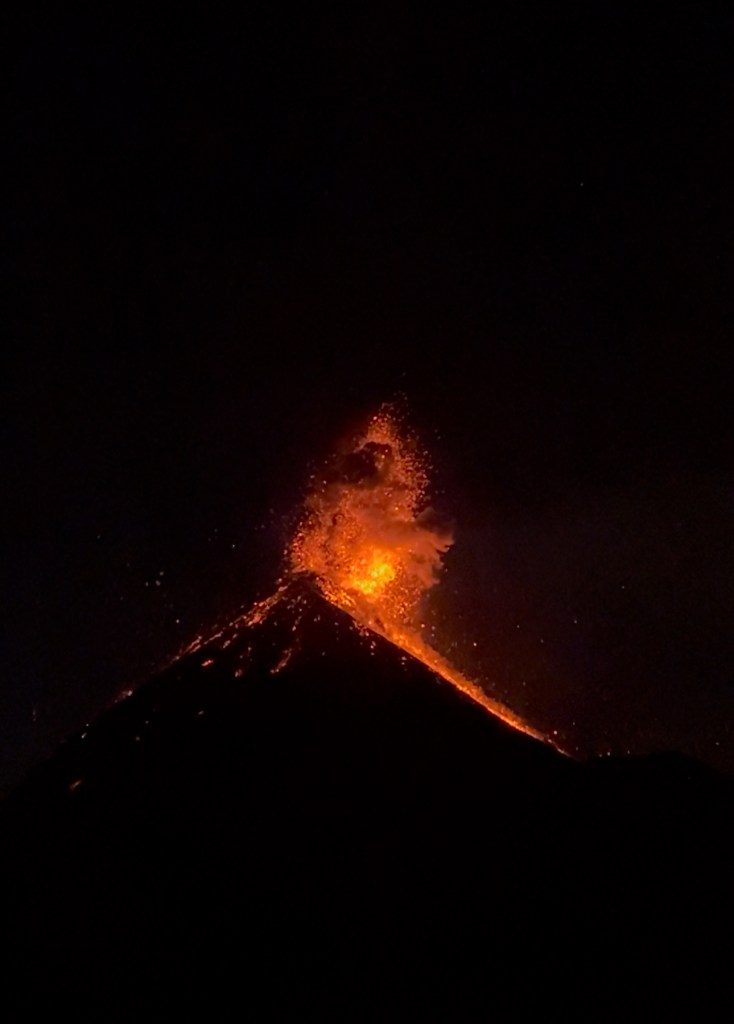
After sunset we began the hike back to basecamp in the dark, where headlamps are essential. After the grueling hike back up the mountain we were greeted with cooked chicken, pasta, carrots, hot chocolate, and wine. I’ve never been more excited for a meal. After swapping stories with new friends and gently fending off a few persistent stray dogs eyeing my dinner, I tucked into my cabin for the night—hoping to witness Fuego erupt, like a kid falling asleep wishing for a snow day.
After essentially no sleep because I was so scared to miss something, Fuego erupted with a ground shaking eruption at 2am. I opened my eyes and through the window could see the most fantastic eruption, lava shooting into the sky bright red. I threw open the cabin door and was in absolute awe. After the initial eruption Fuego erupted about 7-8 more times progressively getting smaller each time until it stopped. We were all giddy and sharing photos and videos. It was unforgettable and a bucket-list moment I could now check off.
Sunrise Summit… or Not
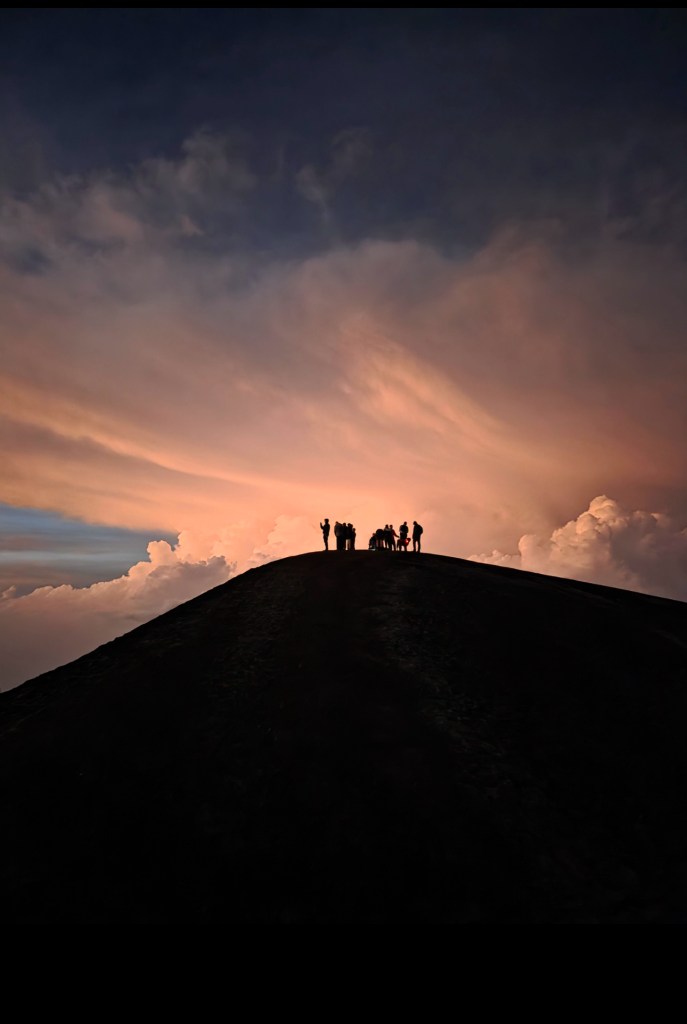
At 3:30 a.m., the guides came to rally everyone for the sunrise hike to Acatenango’s summit. I was ready in spirit—but my body had other plans. Sometime in the night, I came down with food poisoning (from an unrelated source) and became violently ill halfway up the trail.
Defeated, I had to turn back and spend the rest of the morning sick in my cabin while the group summited. They were rewarded with a stunning sunrise—which I admired only through the photos shared with me afterward. (One of those shots is pictured here.)
The descent back to the base was a blur for me—I was still too sick to eat the breakfast served at the bottom. Despite that rough ending, the owner of V-Hiking kindly offered to drive me straight to my next hostel so I wouldn’t have to walk or wait.
Final Thoughts
The Fuego hike isn’t for everyone—but if you’re up for it, it’s one of those experiences that etches itself into your memory forever. Even with the unexpected sickness, I wouldn’t trade that sunset, that eruption, or those moments on the mountain for anything.
If you’re planning to go: be prepared, rent the gear, eat light, and give yourself some rest before and after. Your legs—and your stomach—will thank you.

End of the Trail
From the volcanic peaks of Acatenango to the vibrant markets and tranquil villages of Lake Atitlán, my week in Guatemala was nothing short of unforgettable. Whether you’re drawn to colorful colonial streets, adrenaline-packed hikes, or authentic cultural experiences, this country offers something for every kind of traveler. I hope this guide helps you feel a bit more prepared—and a lot more excited—for your own adventure.
If you have any questions, tips of your own, or just want to share your Guatemala experience, feel free to drop a comment below—I’d love to hear from you!
If your curious about where I stayed in Guatemala and/or Hostel life – checkout my last post, “If You’re Craving Connection, Stay in Hostels”—So I Did, in Guatemala”

 Footprints of Faith
Leave a reply to Rachael Oswald Cancel reply